What Is Candidate Experience? A Recruiter’s Guide to Getting It Right


Updated 4/22/2026
Positive candidate experience is not a “nice to have” in recruiting. It shapes how every candidate feels about your company from the moment they read the job posting to the moment they get a final update, rejection, or job offer.
In this guide, we’ll break down what candidate experience actually means, which touchpoints shape it, where it usually falls apart, how recruiters can improve it during screening and interviews, and how to measure whether the process is getting better.
What Is Candidate Experience?
Candidate experience is how a candidate perceives and responds to your hiring process from start to finish.
It covers every interaction they have with your company, from the first job posting they read to the final update they receive, whether that ends in a job offer or a rejection.
In practical recruitment terms, candidate experience includes both the emotional and operational side of the process. It is about whether the process feels clear, fair, respectful, and worth the effort.
It also includes practical details such as transparency, response speed, interview coordination, and how easy the job application is to complete.
Components of a Positive Candidate Experience

A positive candidate experience is built across the full candidate journey. Every stage either gives a job seeker more confidence in the process or gives them a reason to disengage.
- Career-page content — Your careers page often creates the first impression. It should help a potential candidate understand who you are, what roles you are hiring for, and why your company is worth considering.
- Job descriptions — A clear job description helps candidates assess fit before they apply. It sets expectations around responsibilities, qualifications, location, and what success looks like in the role.
- Applications — The application stage shapes how easy it feels to enter your recruitment process. If the form is long, repetitive, or confusing, the experience starts on the wrong foot.
- Screening — Screening gives candidates an early sense of how organized your hiring team is. A simple, structured screening stage signals that your company respects people’s time.
- Interviews — The interview process shows candidates how your company evaluates talent and communicates under pressure. It also tells them whether the process feels fair and consistent.
- Follow-up — Keeps candidates informed about next steps and timing after each stage. Consistent follow-up helps reduce uncertainty and shows respect for the candidate’s time.
- Rejection communication — A rejected candidate still leaves with an impression of your company. Respectful communication matters here just as much as it does with finalists.
- Onboarding transition — Candidate experience does not end when someone says yes. The handoff from candidate to new hire shapes the final part of the journey and often overlaps with the early employee experience.
The important thing is to treat these as connected parts of one hiring journey. Candidates do not separate them the way internal teams sometimes do. To them, it is all one experience.
Why Does Candidate Experience Matter?
Candidate experience has a direct effect on hiring outcomes. It influences whether strong candidates stay engaged, how they view the company, and whether they move forward with confidence or drop out early.
Affects hiring outcomes
A positive candidate experience helps keep qualified candidates in process and can support offer acceptance. A poor candidate experience can do the opposite and push strong talent out before you ever reach a final decision.
Supports competitive hiring
In competitive hiring markets, candidates usually have options. If two companies offer similar opportunities, the one with the smoother and more respectful hiring experience often has an advantage.

Candidates also use the process as a signal. A strong hiring experience suggests clear communication, good internal alignment, and a company that respects people’s time. A weak one suggests the opposite.
Shapes employer reputation
Candidate experience affects more than whether someone accepts a role. It can influence how quickly candidates respond, how engaged they stay across multiple stages, and how likely they are to recommend the company to others.
People form opinions about the employer whether they get hired or not. A rejected candidate who has a good experience may still apply again later or speak positively about the brand. But a rejected candidate who feels ignored or confused is likely to leave with a very different impression.
Where Does Candidate Experience Usually Break Down?
Most candidate experience problems come from a series of small breakdowns that add up.
- Unclear job descriptions — Make it harder for candidates to understand the role and assess fit. They can also attract the wrong applicants and create confusion before the process even begins.
- Long applications — Create unnecessary friction early in the hiring process. The more effort it takes to apply, the easier it is for strong candidates to drop off.
- Slow follow-up — Leave candidates uncertain and can weaken engagement. Delays can also make the company seem less organized or less interested in moving forward.
- Weak interview coordination — Makes the process feel disorganized and harder to navigate. It can also increase stress for candidates.
- Lack of transparency — Reduces trust when candidates do not know what to expect next. When the process feels unclear, candidates are more likely to disengage or question the company’s professionalism.
Delayed updates, unclear expectations, and disjointed handoffs can make the company feel disorganized, even when the role itself is appealing.
That is where recruiters sometimes underestimate the impact of execution. Something that feels minor internally, like a delayed follow-up or vague scheduling email, can feel much bigger from the candidate side.
Candidates notice when the process feels scattered. And often, those small process issues shape perception more than recruiters expect.
What Does a Good Candidate Experience Look Like?
A strong candidate experience feels organized, human, and worth the effort. Candidates do not expect perfection. They do expect clarity, fairness, and respectful communication.

A better process usually has a few things in common. It is:
- Easy to understand
- Moves at a reasonable pace
- Explains what comes next
- Gives people enough information to prepare
- Treats every candidate like a person, not just a status in the ATS
That is what makes candidate experience important for recruiters. It is not mainly about polishing language. It is about stronger execution.
A better candidate experience comes from process design, communication habits, and consistency at every stage of the hiring journey.
How Can Recruiters Improve Candidate Experience During Screening?
Screening is one of the easiest places to improve candidate experience because it often sets the tone for everything that follows. If this stage feels slow, unclear, or difficult to complete, candidates may assume the rest of the process will feel the same.
Improve the earliest stages of the process
Small improvements at this stage can have a big impact on the overall candidate experience because they reduce uncertainty early and help candidates stay engaged in the process.
- Faster acknowledgement — Confirm receipt quickly so candidates know their application was received and reviewed.
- Clearer next-step expectations — Tell candidates what happens next and when they can expect to hear back.
- Easy-to-follow screening process — Keep the screening stage simple to understand and straightforward to complete.
Think about screening from the candidate side
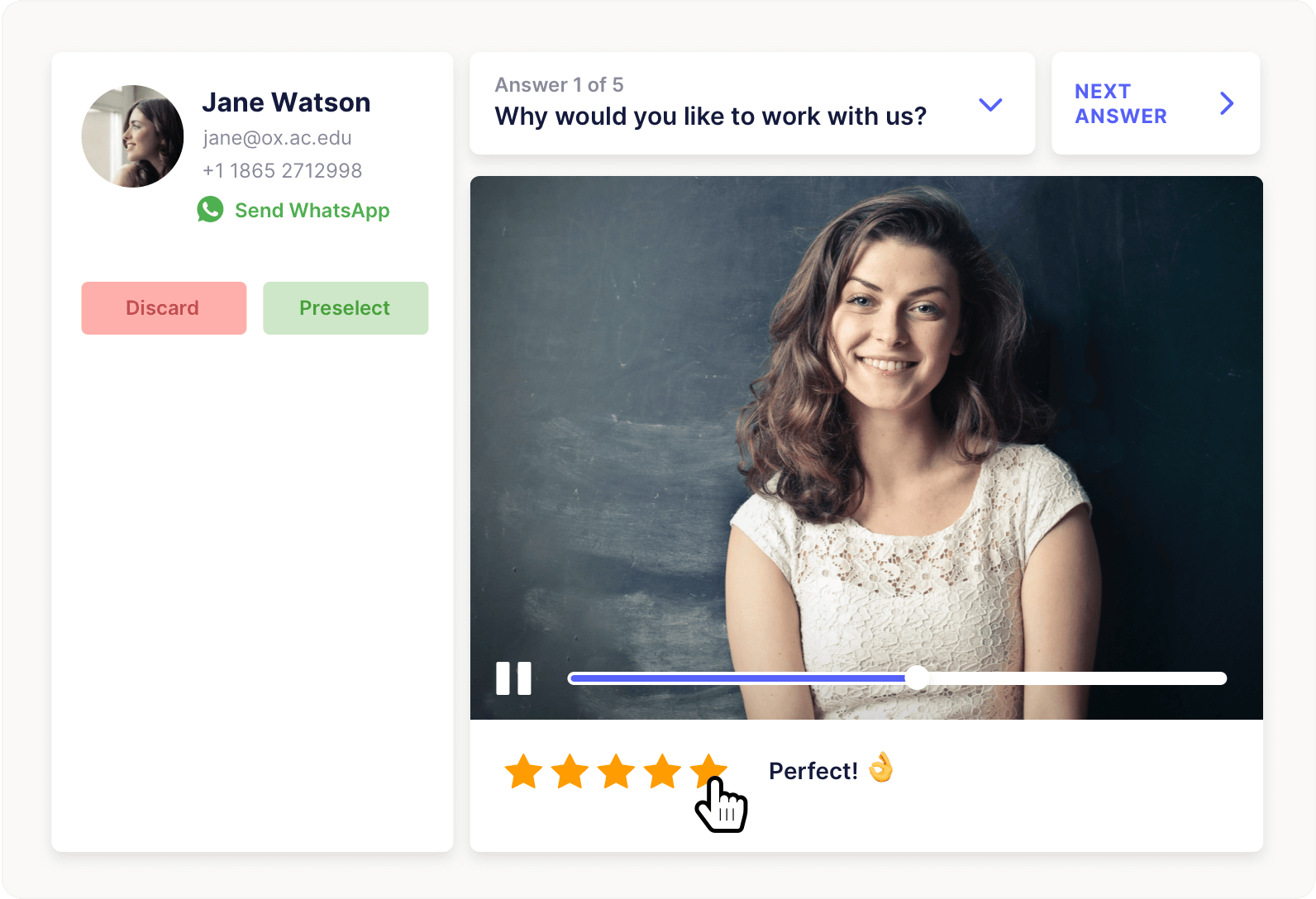
Recruiters can improve this stage by looking at it from the candidate’s perspective, not just the internal workflow side. What information does the candidate need? How long will the step take? Is the format flexible enough to fit around work or personal obligations?
Those questions matter because a screening stage that feels easy to navigate usually creates stronger candidate engagement than one that feels inconvenient or overly rigid.
Use one-way interviews to make screening more flexible
This is where Hireflix fits naturally. One-way video interviews give candidates more flexibility and remove some of the pressure that comes with trying to schedule a live phone screen.
Instead of forcing every early conversation into a fixed calendar slot, candidates can respond on their own time, and recruiters can review answers when it works for their workflow. That makes the process feel more structured without making it feel more rigid.
Want to see how it works in practice? Watch the Hireflix demo to see how a more flexible screening process can improve candidate experience.
Use communication to reduce uncertainty
Hireflix also helps with communication. Automated messages before and after the screening interview keep candidates informed and reduce the uncertainty that often causes frustration. That small layer of clarity can make a big difference in how the hiring journey feels.
How Can Recruiters Improve Candidate Experience During Interviews and Follow-Up?
Once a candidate moves past screening, communication and coordination matter even more. This is the stage where many companies lose momentum.
Make scheduling clear
Interview timing should be easy to confirm and easy to understand. Candidates should not have to guess which format is being used, how long the interview will take, or who they will be meeting.
Help candidates prepare
Preparation details make a big difference. Share the format, expected timing, and anything the candidate should review in advance. A little clarity helps people feel more ready and makes the process feel more respectful.
Keep updates moving
Candidates should not be left wondering about status for long periods. Timely updates improve trust and help maintain momentum throughout the interview process.
Follow through respectfully with every outcome
Even unsuccessful candidates deserve a clear answer. Respectful rejection communication protects reputation and leaves people with a better final impression. A rejected candidate who feels respected may still speak positively about your company or reapply later.
How Do You Measure Candidate Experience?
Candidate experience needs to be measured. Otherwise, teams end up assuming the process is working when candidates may be experiencing something very different.
Candidate experience becomes much easier to manage when you track a few practical indicators and recruitment KPIs:
- Candidate satisfaction — Shows how candidates rate their overall experience throughout the process.
- Drop-off rates — Reveal where candidates leave the hiring funnel before completion.
- Response speed — Measures how quickly the team acknowledges, updates, or replies to candidates.
- Time to hire — Tracks how long it takes to move a candidate from application to accepted offer.
- Interview no-show patterns — Help identify whether scheduling, communication, or process friction is causing candidates to disengage.
The best way to measure candidate experience is to combine process data with direct candidate feedback. Metrics can show where friction happens, but they do not always explain why.

For example, drop-off rates may show that candidates leave after the application stage, while feedback can help explain whether the issue is application length, unclear instructions, or weak role alignment.
It also helps to review candidate experience by stage instead of relying on one overall score. A company may have decent candidate satisfaction overall but still struggle with screening or post-interview follow-up.
Breaking the journey into smaller parts makes it easier to spot recurring issues and focus on the fixes that will have the biggest impact.
Build a Better Candidate Experience With a Stronger Hiring Process
Candidate experience is the sum of every hiring interaction, from first impression through final communication.
It does not improve through one polished email or one well-run interview alone. It gets better when the hiring process becomes clearer, easier to navigate, and more consistent from stage to stage.
For teams that want a more candidate-friendly screening process, Hireflix is a practical fit. Its one-way video interview format gives candidates more control over timing, reduces live-screening friction, and helps recruiters review responses more efficiently.
That smoother early-stage experience can improve candidate engagement without making the hiring process harder to manage.
FAQs
What is candidate experience?
Candidate experience is how a candidate perceives and responds to your hiring process from start to finish, covering every interaction from the first job posting to the final update, offer, or rejection.
Why does candidate experience matter?
It has a direct effect on hiring outcomes, helping keep qualified candidates engaged and shaping employer reputation, since candidates who feel respected are more likely to accept offers, reapply, or speak positively about the company.
How can recruiters improve candidate experience during screening?
Recruiters can speed up acknowledgement, clarify next-step expectations, and use one-way video interviews to give candidates more flexibility and reduce scheduling pressure.
