Top 12 Competency-Based Interview Questions

Competency-based interviews are a fantastic way to see past a polished resume and into what a candidate is actually capable of. Instead of asking what a candidate would do, they ask what a candidate actually did, then weigh the answer against the skills the role demands.
This guide walks through 12 competency-based interview questions worth asking, what each one measures, and the kind of answer that signals real ability. Use them to hire on evidence instead of just following your gut.
What is a competency-based interview?
A competency-based interview measures a candidate against the specific skills a job requires, using their real past behavior as the evidence. Rather than a loose chat, it's a structured interview: interviewers ask the same behavioral questions of everyone and score the answers against predefined criteria or a rubric.

That structure is what makes it fairer and more predictive than the unstructured interviews many teams still run, where a likeable candidate can coast on charm alone. Because the focus stays on demonstrated skill, competency questions speak to one side of the familiar skill set versus cultural fit debate: the evidence-based side.
Most competency questions fall into three buckets:
- Behavioral questions ask for a real past example showing how someone handled a competency in practice.
- Situational questions ask how a candidate would approach a hypothetical scenario tied to the role.
- Technical questions test the job-specific knowledge or task capability the specific role needs.
The bulk of this list is behavioral, since past behavior remains the best available signal for future performance.
What answers to look for
Great answers have a shape, and the STAR method is the fastest way to spot it. When a candidate walks you through a story, listen for four parts:
- Situation: the context or problem they were facing.
- Task: the specific responsibility, goal, or challenge that fell to them.
- Action: the steps they personally took.
- Result: the outcome, ideally with a measurable impact.
Weak answers jump straight to the result or get stuck circling the context. The Action is where the real signal lives, so when someone glosses over what they actually did, treat that as your cue to dig in.
Plenty of candidates rehearse a polished sample answer through interview preparation or a mock interview, and STAR is how you tell a memorized story from a lived one.
Top 12 competency-based interview questions
Here are the questions themselves, running loosely from adaptability and problem-solving through to leadership, foresight, and judgment.
Each comes with the competency it targets and the signal to listen for in a strong answer. Pick the handful that map to your role rather than firing off all twelve at once, and pair each with the STAR-based follow-ups above.
1. Tell me about a time you had to adapt to a major change at work.
Adaptability is the competency here, and it's one of the most transferable skills a hire can bring. Listen for how the candidate responded when expectations shifted or the ground moved under them.
Three things separate a real answer from a rehearsed one:
- They name what specifically changed, not just that "things got busy"
- They describe an adjustment they chose to make, rather than change that simply happened around them
- They can say how it turned out, even if the ending was messy
Be skeptical of anyone who labels themselves "flexible" with no example behind the word.
2. Give me an example of a time you had to prioritize tasks under pressure.
Pressure exposes judgment. This question checks how a candidate decides what matters most when time or resources run short, and for, say, a project manager juggling five workstreams, that decision is practically the whole job.
You want structure, clear tradeoffs, and follow-through, not a story that ends in "so I stayed late." Ask what competing priorities were in play and how they chose between them. A good answer to a tight deadline shows thoughtful prioritization rather than a willingness to burn extra hours.
3. Tell me about a time you solved a difficult problem.
Almost every role rests on problem-solving. Trace how the candidate defined the problem, gathered information, and settled on a solution.
The revealing follow-up is about the road not taken. Ask what alternatives they weighed and why they went the way they did. "I'm a natural problem solver" collapses the moment you ask someone to walk through their reasoning, while a candidate who genuinely thought it through will happily talk you past the decision point and into the tradeoffs.
4. Describe a situation where you had to communicate a difficult idea clearly.
Communication skills separate people who understand something from people who can help others understand it. Watch how the candidate tailored a complex or sensitive message to their audience.
Useful probes here:
- How did you know the other person actually understood?
- What did you change about your explanation partway through?
- What would you say differently now?
Effective communication is about shared understanding, not the volume of information a candidate pushed across the table.
5. Tell me about a time you supported a colleague who was struggling.

Empathy, teamwork, and interpersonal skills all surface in the small moments this question targets. Notice first whether the candidate spotted the problem without being told, which reveals a lot about their awareness of others. Then check that they offered useful help without abandoning their own responsibilities.
Ask what the colleague needed and how they decided what to offer. The mark of maturity is appropriate support, not taking over someone else's work to look good in the process.
6. Describe the most challenging negotiation you've handled.
Negotiation reveals commercial judgment and a streak of strategic thinking. Look at how the candidate prepared, ranked their priorities, and read the other party's position.
- Encouraging signs: they understood what the other side needed, they knew which concessions they could afford, and the outcome held up afterward.
- Warning signs: the story is mostly about winning, the other party is described as unreasonable, or the deal collapsed later.
The tell is whether they aimed for something workable or simply tried to come out on top.
7. What's a skill you've significantly improved, and how has it changed the way you work?
Self-awareness and a commitment to development drive this one. A strong candidate names a genuine area of growth and describes deliberate work on it, not improvement that accumulated through repetition.
Then look for the payoff. "I got better at public speaking" means little on its own; "I stopped writing scripts and started using three bullet points, and my demos stopped running over" tells you something happened. Growth that shows up in outcomes is the kind worth paying for.
8. What was the last thing you taught a team member, and how did you approach it?
Teaching is knowledge-sharing under a microscope. Watch how the candidate broke the subject down and adapted to the learner in front of them, and whether they checked for understanding along the way rather than assuming it.
The real test is what happened next. Could the other person apply what they learned without constant hand-holding? Explaining something well enough to make someone else independent is a genuine leadership skill, and it's rarer than it sounds.
9. Tell me about a time you spotted a potential problem before it became serious.

Foresight is valuable, and this question brings it into view. You're looking for how the candidate noticed early warning signs others missed, whether they gathered enough evidence before raising the alarm, and who they pulled in once they did.
A convincing answer ends with risk reduced, disruption avoided, or an outcome improved. That's someone who can act on a hunch responsibly instead of either ignoring it or overreacting to it.
10. Describe a time you introduced a new idea or procedure and met resistance.
Change leadership and stakeholder management live here. Listen for how the candidate made the case for change and, more tellingly, how they handled the pushback.
Sort their answer into one of three patterns:
- They listened and adapted. Objections changed the plan for the better. Best outcome.
- They listened and held firm. They heard the concern, explained why it didn't change the decision, and brought people along anyway. Also fine.
- They pushed through. Compliance without agreement, which tends to unravel the moment they stop pushing.
The outcome you want is genuine adoption, not surface-level cooperation.
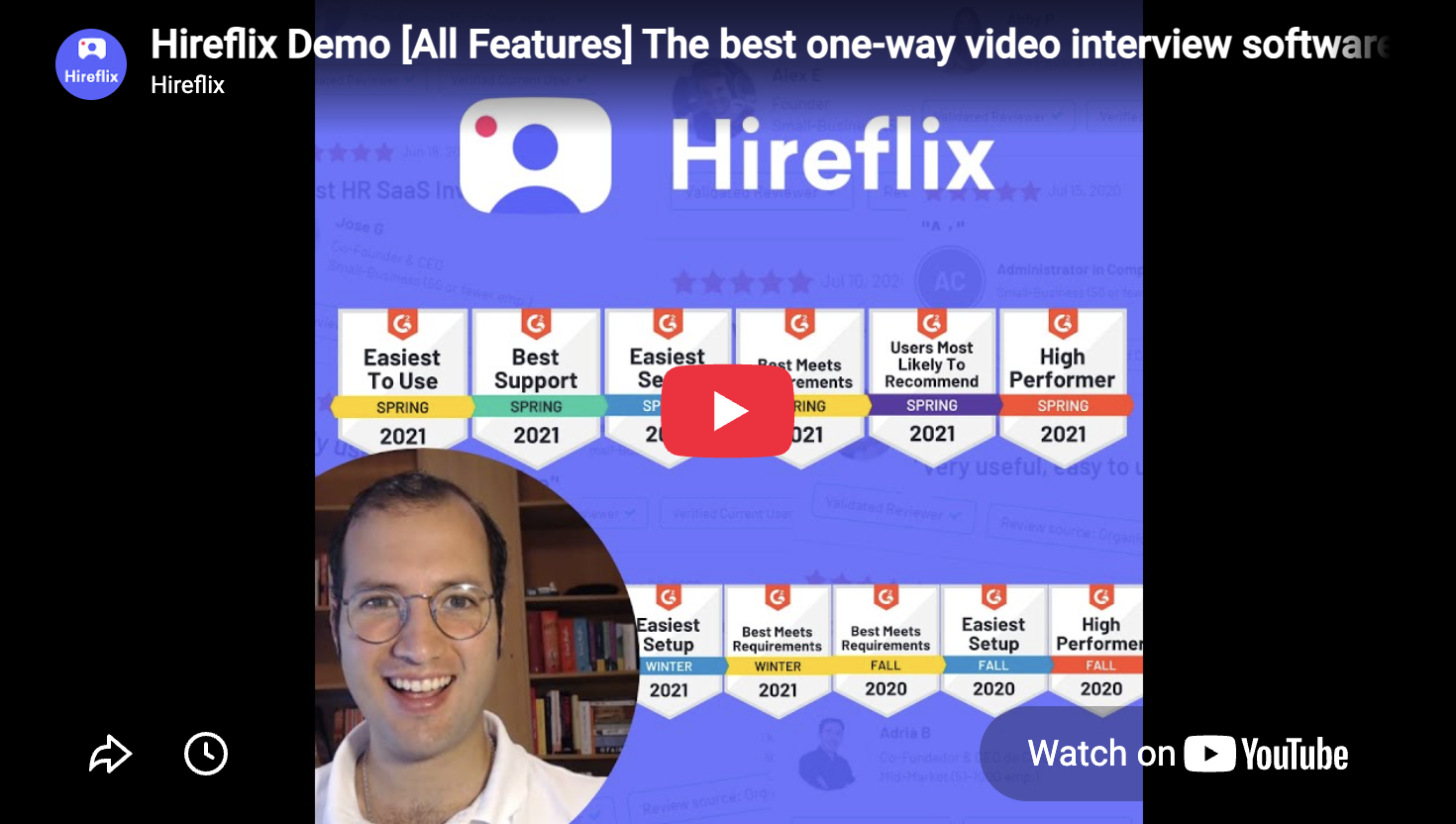
Want to see how Hireflix works in practice? Watch the demo to explore its features and workflow.
11. Discuss a time you made or defended an unpopular decision.
Courage and accountability are hard to test, and this question gets close. Check whether the decision rested on evidence and clear priorities, and whether the candidate weighed the effect on other people before acting.
Ask how they explained it to those who disagreed. The strongest answers hold two things at once: standing firm on a sound decision while staying open to valid feedback. Stubbornness and conviction look identical until you probe the reasoning underneath.
12. Tell me about a task where attention to detail was critical.
Precision protects everything downstream. Ask about the systems or checks the candidate used to catch mistakes before they shipped, then ask what could have gone wrong if they'd missed one.
That second question matters more than the first. A good answer ties their care to a real stake: quality, safety, accuracy, or customer satisfaction. Attention to detail without a sense of what's at risk is just fussiness.
How to use competency-based interview questions effectively
A strong question list is only half the job. How you run the interview decides whether the answers mean anything.
Standardize around the competencies
Ask the same core questions of every candidate applying for the same role, mapped to the key competencies in the job description. Score each answer against a rubric so your interviewers compare evidence rather than impressions.
That's the difference between a structured interview that predicts future performance and an unstructured chat that mostly measures likeability. When recruiters and hiring managers share one rubric, their notes actually line up at decision time.
Sharpen your follow-up and scoring
Don't take vague answers at face value. When a candidate skips ahead, probe for the situation, the action, and the result until you can picture exactly what they did.
Write down your assessment right after each interview, while it's fresh, instead of trusting your memory an hour later. It's a small habit with a real payoff, keeping your read on each candidate's ability honest and comparable across everyone you meet.
Build better interviews with competency-based questions
Competency-based interview questions do one thing exceptionally well: they let you evaluate real behavior consistently, candidate after candidate, instead of reacting to whoever interviews most smoothly.
Pair the right questions with a shared rubric and the STAR method, and your hiring decisions start resting on evidence that employers can actually stand behind.
Hireflix makes that easy to run at scale. Ask every applicant the same competency-based questions as structured one-way video interviews, review the responses whenever it suits your team, and keep the comparison fair from the first candidate to the last. Want to see it first? Watch a quick demo of the platform.
