Does One-Way Video Interviewing Hurt Candidate Experience? What the Data Actually Shows

One-way video interviews tend to divide opinion. Some candidates see them as cold or impersonal, while others appreciate the flexibility of completing an interview on their own schedule.
The difference often comes down to how the process is designed. Candidates on Reddit and columnists in Forbes have criticized pre-recorded interviews as “dehumanizing.” But at the same time, candidates who go through a well-structured process often report a much more positive experience.
Research points in the same direction. One study by Zibarras and colleagues on asynchronous video interviews found that applicants rated the format as fair because everyone answered the same questions under the same conditions.
So the real question isn’t whether one-way video interviews are inherently good or bad for candidate experience. It’s what makes the same format feel respectful in one hiring process and frustrating in another, and what recruiters can do to get it right.
Where the criticism comes from
The criticism around asynchronous interviews deserves a fair hearing. Most concerns come back to the same issues like the lack of live interaction and the risk of inconsistent or unfair evaluation.
The conversation that never happens
A good interview works in both directions. The company evaluates the candidate, and the candidate weighs whether the role, team, and workplace fit.
With a one-way interview, that live exchange is missing. Applicants can’t ask questions in the moment, read the interviewer’s reactions, or get a sense of the people they might work with.
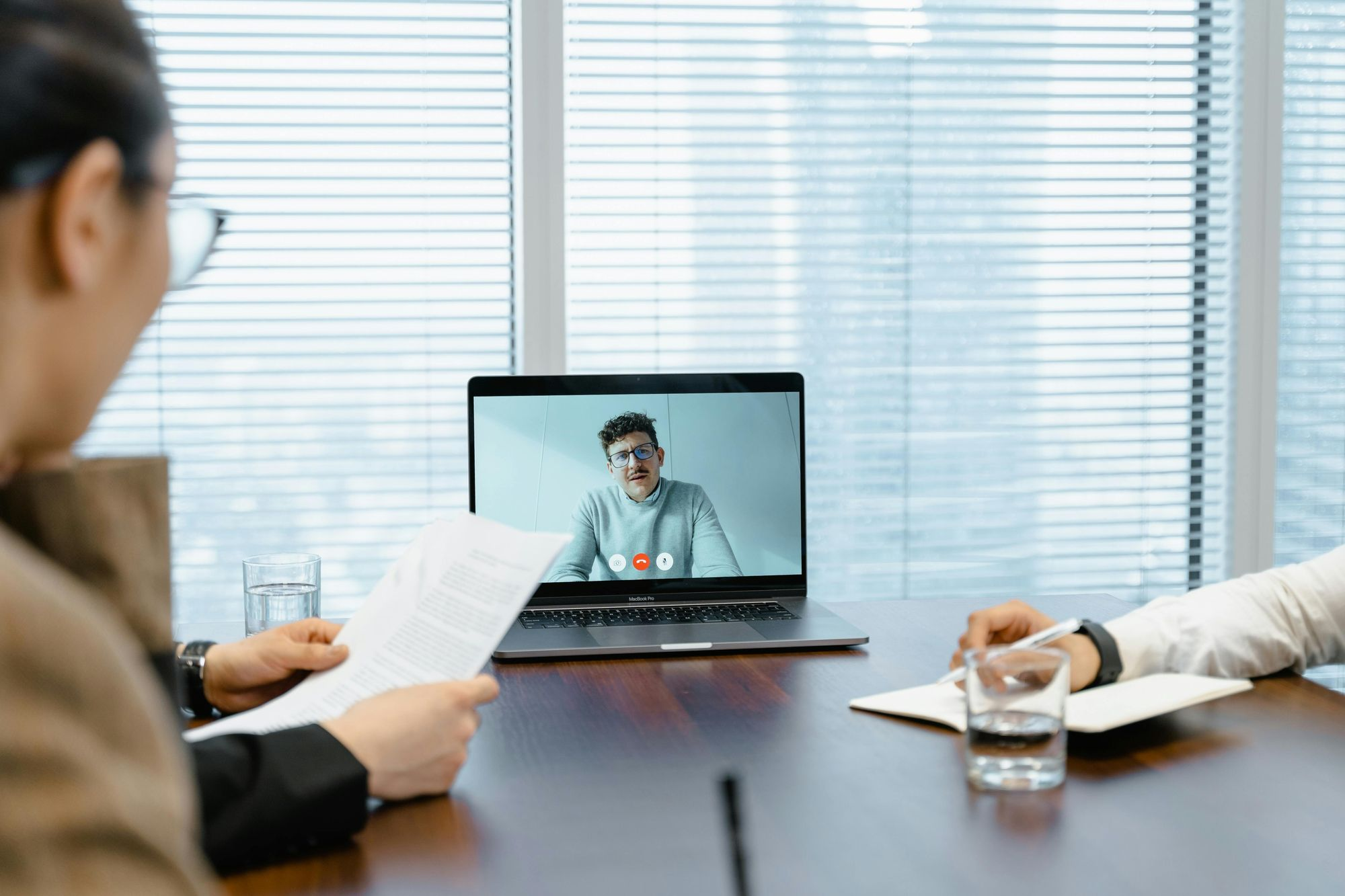
The format can also feel awkward for candidates who aren’t used to speaking to a camera. This kind of discomfort can make it harder for candidates to come across naturally, especially when communication and soft skills are part of what’s being evaluated.
Bias and access
Fairness becomes a concern when reviewers watch recordings without enough structure. Like any video format, live video interviews included, one-way interviews expose reviewers to visual characteristics such as appearance, age, gender, race, or disability before a real conversation has started.
Structure is the safeguard. Consistent questions and clear evaluation criteria keep reviewers focused on what candidates say and do rather than how they look on camera.
Candidates also face uneven access. As the academic literature points out, they don’t all have the same internet connection, webcam quality, home environment, or disability accommodations.
These issues are real, and every one of them can be addressed with better process. How well the interview is designed shapes the candidate experience far more than the one-way format does.
What candidates say when researchers actually ask them
Anecdotes only tell part of the story, so it helps to look at what researchers found when they asked candidates directly.
Consistency and fairness
One study, an exploration of applicant perceptions of asynchronous video MMIs by Zibarras et al., examined asynchronous video interviews in medical-school admissions. Applicants generally rated the format as fair.
Consistency drove much of that view. Everyone answered the same questions under the same time limits and conditions, and the interview content was clearly tied to the selection process.
Candidates also appreciated the convenience of avoiding travel, scheduling conflicts, and the extra costs that can come with in-person interviews.

Time and financial savings
A scoping review of video-based interviewing in medicine by Selvam et al. also found that video interviewing generally reduced time and financial costs for candidates, especially when travel and scheduling were involved.
Evidence on one-way interviewing specifically was more mixed, and some candidates in the review questioned whether the format belonged in the process at all. Recruiters see the same split in practice. Candidates respond well when the format is used at the right stage and explained clearly.
What both studies have in common
In both studies, candidates’ sense of fairness was closely tied to how the process was designed, especially its structure, transparency, and relevance to the role. That helps explain why opinions online differ so much.
A poorly designed one-way interview can feel impersonal or unnecessary, while a clear and flexible process can feel convenient. Pablo García, a Streamloots candidate who interviewed through Hireflix, described that benefit simply: “I loved the flexibility! I did the interview on a Saturday and from another city.”
Rating: ⭐⭐⭐⭐⭐
Oct 11, 2021
"The future of hiring"
What do you like best about Hireflix One-Way Video Interviewing?
Our applicants love the experience. Since adopting Hireflix, completion rates increased from about 25% to about 90%. It gives us a fast, simple way to start the funnel with a short first interview.
What problems is Hireflix One-Way Video Interviewing solving and how is that benefiting you?
It helps us screen and interview candidates faster while keeping the process simple. Starting the application with an interview saves time and makes the early stage easier for both our team and applicants.
Steve A., Managing Director on G2
Implementation, not format, is the issue
Complaints about one-way video interviews usually fall into a few practical buckets: candidates don’t know what to expect, the process feels impersonal, or the recording adds work without improving the hiring decision.
Most of those problems can be addressed through better process design.
Many of the frustrations candidates associate with this format are within the hiring team's control. Clear instructions, timely follow-up, consistent evaluation, and a human next step go a long way toward making the process feel respectful.
How to use one-way video interviews for a positive candidate experience
Much of the candidate experience is decided by how the interview is run. Recruiters can keep the flexibility of one-way video interviews and still address the concerns candidates raise most often.
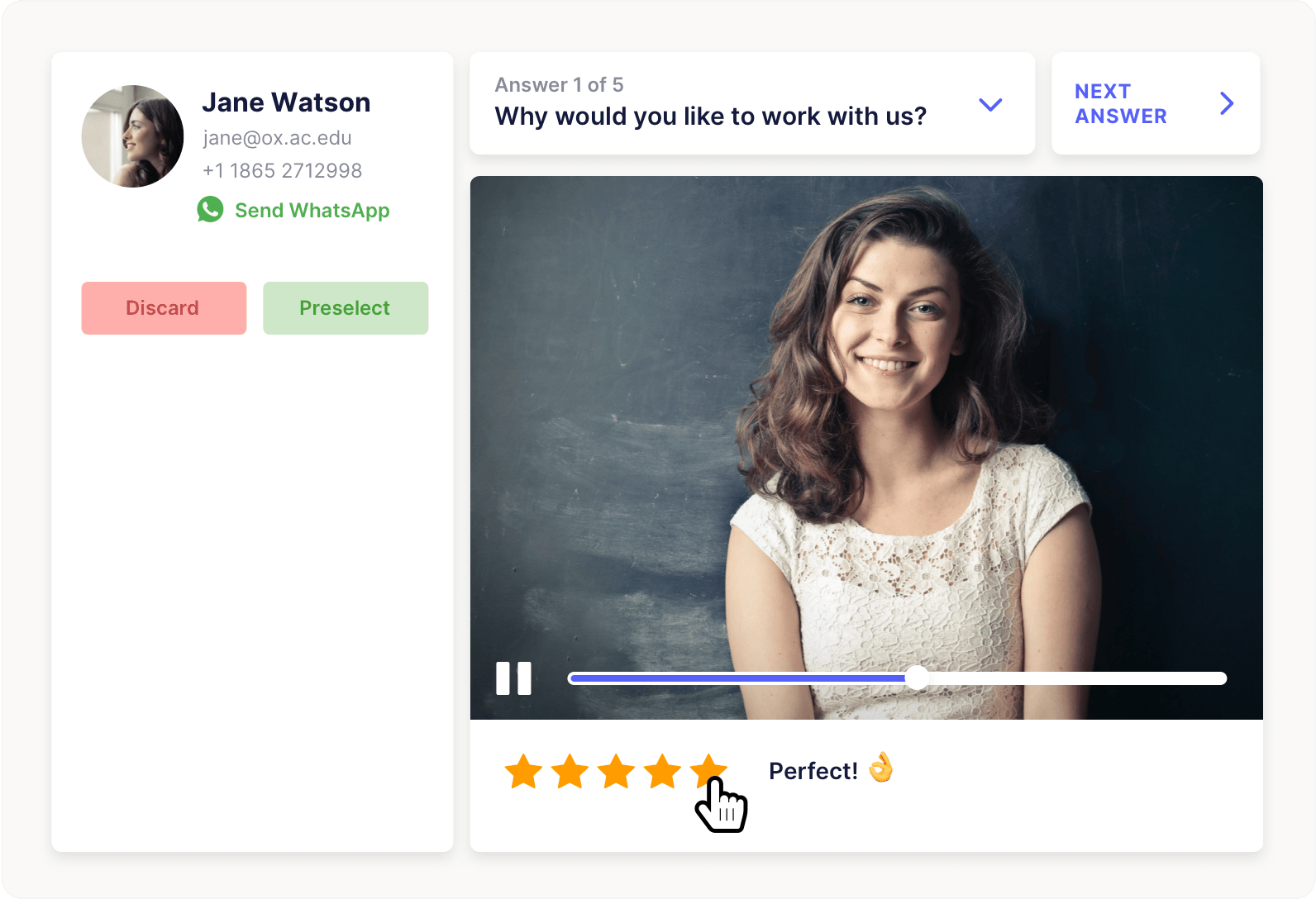
Done well, the practices below preserve the scheduling and screening benefits for hiring teams while giving candidates a process that feels fair and respectful.
- Explain the process upfront. Tell candidates what the video interview involves, who will review their responses, and when they can expect to hear back.
- Allow enough time and flexibility. Give candidates time to think and, where possible, let them re-record responses. That takes off unnecessary pressure and leads to more representative answers.
- Keep questions relevant to the role. Base each question on the skills and situations candidates are likely to encounter on the job. Skip vague prompts that add little to the evaluation.
- Use consistent evaluation criteria. Score responses with a structured rubric and involve more than one reviewer where appropriate.
- Follow up with every candidate. Let applicants know where they stand, even if they aren't moving forward. A timely update keeps the process from feeling like a black box.
- Treat the recorded interview as one stage of the process. Make it clear that the one-way interview is an early screening step rather than a replacement for all human interaction.
These practices allow recruiters to keep the scheduling and screening benefits of asynchronous interview platforms without making the process feel unnecessarily distant. The goal is to make early screening easier for the hiring team while still giving candidates a process that feels fair and respectful.
So, does one-way video interviewing hurt candidate experience?
Not inherently. Format alone doesn’t decide how candidates feel, and both research and real hiring processes back that up.
What the research and candidate feedback say
The available research, largely from structured, high-stakes settings like medical school admissions, and candidate feedback from hiring processes point the same way. The experience follows how well the process is designed and communicated.
Candidates who know what to expect and who are reviewing their responses find one-way video interviews flexible and convenient. Take those elements away and the same format feels distant and impersonal.
What this means for hiring teams
Hireflix supports one-way video interviews with features that help teams build a more structured and candidate-friendly process, including recruiter intro and outro videos, job-related questions, retakes, flexible completion windows, multi-reviewer scoring, and candidate communication.
If you’re deciding whether asynchronous video interviews belong in your hiring process, look at how you’d use them before you judge the format. Build the process around the candidate, and one-way video interviews can deliver a smoother experience while keeping the efficiency recruiters need.
CTA: Try Hireflix for FREE for 30 days
FAQs
What's the difference between one-way and two-way video interviews?
A two-way video interview happens live. The candidate and interviewer talk on camera at the same time, much like a standard virtual interview.
A one-way, or asynchronous, video interview works differently. Candidates record responses to preset questions on their own schedule, and the hiring team reviews those recordings later. This format offers more flexibility for recruiters and candidates.
Are one-way video interviews biased?
They can be, but the format itself isn't the problem. Bias is more likely to influence decisions when one reviewer relies on gut feel, appearance, or other subjective impressions, and that risk exists in live interviews too.
Using job-related questions, a consistent scoring rubric, and more than one reviewer can help reduce that risk. Because every candidate answers the same questions under the same conditions, one-way interviews can also make the evaluation process more consistent than an unstructured live interview.
Do candidates actually hate one-way video interviews?
No, not inherently. Candidates who go through a well-structured one-way interview often describe it as convenient, low-pressure, and even preferable to scrambling to find time for a live call.
The dislike people voice online usually traces back to specific, fixable problems: little communication, no sense of who's reviewing the recording, or the interview replacing every human touchpoint in the process. When it's clear, flexible, and positioned as an early step before a live conversation, candidates frequently rate the experience as more convenient than traditional interviewing, especially when scheduling is tight.
Should every role use a one-way video interview?
No. One-way video interviews are most useful when they help narrow a large candidate pool, assess communication or other role-relevant skills early, or reduce scheduling friction during the first stage of hiring.
For senior, highly relationship-driven, or low-volume roles where a recorded interview would not meaningfully affect who moves forward, a live conversation may be the better choice. The format should serve a clear purpose rather than simply add another step to the process.
