5 Easy Ways to Improve Culture Fit Assessments

Hiring for culture fit can help teams make better decisions, but only when the process is clear and grounded in real job expectations.
Without structure, culture fit can quickly turn into vague instinct or personal preference. That makes hiring less consistent and less fair.
In this article, you’ll learn what a culture fit assessment actually is, why it matters, and five practical ways to improve it.
Because Hireflix helps teams bring more structure to early-stage screening, we’ve seen how much better fit decisions become when the process is clear, consistent, and easier to review.
What Is a Culture Fit Assessment?
A culture fit assessment is a way to evaluate whether a candidate’s values, behaviors, and work style align with how a team and business actually operate.
It looks at whether someone is likely to work well within the company culture, communication style, expectations, and day-to-day work environment.
The goal is not to hire people who all think the same way. It’s to understand whether someone can succeed in the existing workplace culture while still bringing something useful to it.
A strong fit can also include a “culture add”

Many teams now talk about cultural add alongside culture fit. A candidate may not mirror the current team’s background or personality, but they can still show strong cultural alignment in the ways that matter for the role.
For example, they may bring value by showing:
- Clear communication
- Adaptability during change
- Strong collaboration across different personalities
- Accountability in fast-moving situations
In that case, they may still be the right fit even if they also broaden the team.
Why Does Culture Fit Assessment Matter?
A culture fit assessment matters because hiring success is about more than just skill. A candidate can look strong on paper and still struggle if their expectations, communication habits, or approach to teamwork do not match the team’s daily reality.
Affects performance and retention
When there is poor cultural fit, the impact often shows up quickly. The new hire may feel disconnected from the team, frustrated by the pace of work, or unclear on what success looks like.
That can affect employee satisfaction, slow onboarding, and create tension in collaboration. Over time, it can also lead to lower job satisfaction or turnover.
Improves collaboration
A good cultural fit often supports smoother onboarding and stronger teamwork. People tend to ramp up faster when they understand how the team communicates, how decisions get made, and what kind of accountability the role requires.
Supports smaller teams
This matters even more for SMBs. In a large company, one mismatch can sometimes be absorbed.
In a smaller business, one poor-fit hire can affect the whole group. It can put pressure on collaboration, create gaps in trust, and force managers to spend extra time fixing issues that should have been screened earlier.

That is why better fit assessment is not just a soft hiring preference. When teams improve how they assess cultural fit, they reduce avoidable hiring mistakes and make the hiring process more dependable.
5 Easy Ways to Improve Culture Fit Assessments
Getting culture fit right takes more than instinct. These five tips will help you assess alignment more clearly and consistently, so you can make better hiring decisions with less guesswork.
1. Define What Culture Fit Actually Means
Many hiring teams say they care about company culture, but the phrase often stays too broad to be useful. If interviewers are working from different assumptions, the assessment will stay inconsistent.
A better approach is to identify the traits and behaviors that matter most for success in the role. That could include:
- Communication style
- Adaptability
- Collaboration
- Accountability
- Comfort with the team’s work environment
It may also include how someone responds to feedback, whether they take initiative, or how they manage shifting priorities.
Tie culture fit to the real work environment
Tie those criteria to the team’s actual day-to-day environment. A highly collaborative team may need someone who communicates often and works well in shared decision-making, while a more independent setting may require stronger ownership and self-direction.
In both cases, the goal is to connect the company’s values and organizational culture to real working behaviors.
Turn broad values into observable criteria
This is where broad values need to become specific. If your culture values accountability, define what that looks like in practice. If it values adaptability, explain how that shows up in the role.
Turning abstract values into observable criteria makes culture fit easier to assess fairly and gives interviewers more useful insight.
2. Use Structured Screening Questions
Once culture fit is clearly defined, the next step is to bring more structure into screening. One of the easiest ways to do that is to use the same culture fit interview questions across candidates for the same role.
Make comparisons easier and fairer
Instead of relying on whoever happened to ask the strongest follow-up questions, the team gets a more consistent view of each candidate.
It also helps surface alignment early, before the process moves into later rounds where the time investment is higher.
Well-written culture fit interview questions make it easier to compare candidates on the same criteria rather than on general impression.
Implement one-way interviews
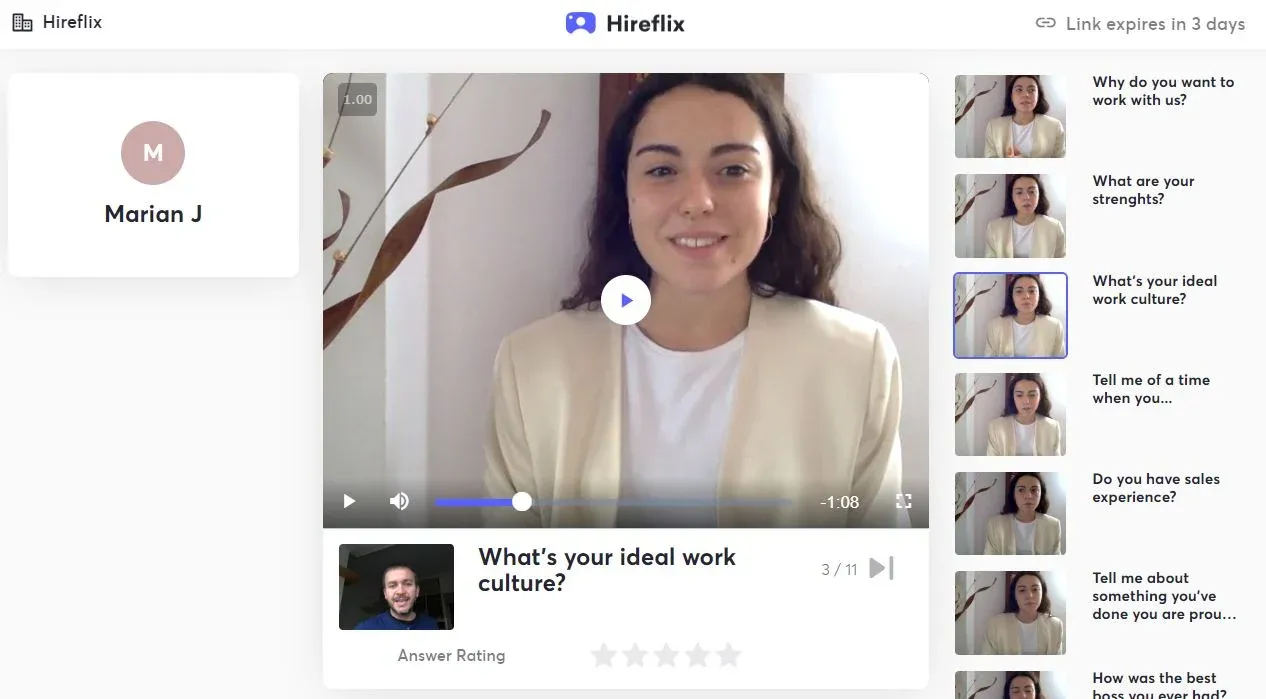
Instead of trying to coordinate calendars for every early conversation, recruiters and hiring managers can evaluate the same responses on their own time. This is also where Hireflix can help.
Because Hireflix supports one-way video interviews, teams can review candidate responses asynchronously during screening and keep the process more consistent.
It also gives teams a practical way to review answers side by side, which can lead to stronger early-stage alignment decisions.
See how Hireflix works by watching the demo below.
3. Focus on Past Behavior Instead of Gut Feel
If you want better fit decisions, focus on evidence. Asking about past behavior is usually more useful than relying on first impressions, chemistry, or vague intuition.
Use behavioral evidence to assess fit more accurately
This is where behavioral interviews and the right behavioral question prompts make a difference. Ask candidates how they handled teamwork, feedback, conflict, or shifting priorities in previous roles.
Get them to share what they did, how they approached the situation, and what the outcome was. These answers often reveal more about soft skills, judgment, and leadership style than a general conversation about values.
Look for patterns in how candidates work
Past behavior is not a perfect predictor, but it usually gives a stronger insight into how someone works than instinct alone. It can reveal:
- How a person communicates under pressure
- How they respond when plans change
- Whether they take accountability when something goes wrong
- How they work with others during friction or uncertainty

Reduce subjective decision-making
When teams rely too heavily on gut feel, they can slip into unconscious bias without realizing it. People may favor candidates who seem familiar, speak similarly, or mirror the personalities already on the team.
That is one reason a personality test or any personality assessment should be used carefully. The strongest fit decisions usually come from combining structured questions with observable examples from a candidate’s real experience.
4. Involve the Right People
A stronger cultural assessment also depends on involving the right people in the right way. That usually means including recruiters, hiring managers, and future teammates where appropriate, but without turning the process into a long chain of repeated opinions.
Give each person a distinct role
Each person should assess a different part of fit. This helps the team gather more useful input without repeating the same feedback. For example:
- Recruiters can focus on communication, motivation, and overall alignment with the role
- Hiring managers can assess expectations, ownership, and day-to-day fit with the team’s workflow
- Teammates can offer perspective on collaboration style and working relationships
Keep the process focused and useful
The key is to keep that involvement focused. If everyone is assessing the same thing in the same way, feedback becomes repetitive and less useful. A better process clarifies who is responsible for what, so the team gathers broader input without creating confusion.
Rather than turning fit into a vague group discussion, the team collects targeted feedback from people with relevant perspectives.
5. Make Assessments More Consistent
The last step is to make your process repeatable. Even strong interviewers can make uneven decisions if the evaluation method changes from one candidate to the next.

Consistency starts with shared criteria. If the team agrees on what fit means, the next step is to use the same evaluation standards during screening and interviews. That may include:
- Interview scorecards
- Shared feedback forms
- Defined rating criteria
- Agreed standards for written feedback
- Repeatable review methods across roles
This does not mean turning the process into a rigid checklist. It means giving the team a more dependable structure for judgment. Consistent methods make candidates easier to compare and improve feedback quality.
Some teams also use cultural fit assessment tools, behavioral assessments, or broader frameworks such as a culture assessment or organizational culture assessment instrument. These can add context, but they work best as support tools, not decision-makers on their own.
Over time, a more consistent approach can reduce mis-hires, improve cultural alignment, and support better long-term outcomes. For small and growing businesses, that can directly improve hiring quality.
Build a Stronger Hiring Process With Better Culture Fit Assessments
A better culture fit assessment starts with clarity. When teams define fit clearly, assess it early, and evaluate candidates consistently, they make stronger hiring decisions and reduce the risk of relying on instinct alone.
If your team wants a more flexible and consistent way to assess candidates before later rounds, Hireflix can help bring more structure to that early stage and make candidate evaluation easier to manage.
FAQs
What is a culture fit assessment?
A culture fit assessment evaluates whether a candidate's values, behaviors, and work style align with how a team and business actually operate.
Why does culture fit matter?
Poor cultural fit can leave a new hire disconnected from the team, slow onboarding, and lead to lower job satisfaction or turnover, while good fit supports smoother onboarding and stronger teamwork.
How can teams make culture fit assessments more consistent?
Teams can use shared criteria like interview scorecards, feedback forms, and defined rating standards so evaluations stay repeatable and candidates are easier to compare.
