How To Screen Resumes Without Wasting Your Time

Resume screening eats up more recruiter time than almost any other part of hiring, and the payoff is shrinking. But faster screening shouldn’t mean rushed decisions or missed candidates.
This guide covers the practical side of screening resumes well, including how to set clear criteria and sort candidates fast without losing the good ones. You’ll also see why resume screening alone isn’t enough anymore, and what to do when resumes don’t show the full picture.
1. Create a Resume Screening Rubric Before You Start
Opening resumes without a plan is how candidate screening turns into guesswork. Before you review the first application, decide what actually matters for the role and write it down.
A simple rubric keeps every resume tied to the same standard, so reviewers aren’t making different calls based on instinct or personal preference.
Define Your Must-Have Criteria
Start with the qualifications candidates truly need to do the job. These should come from the job description, but they should also reflect the real demands of the role. Here’s some useful criteria to keep in mind:
- Required skills
- Required experience
- Certifications
- Location needs
- Work authorization
- Technical skills
- Other non-negotiable job requirements
Keep this list short. Only include items as 'must-haves' if their absence would really prevent a candidate from succeeding.
Separate Requirements From Preferences
Many hiring teams make screening harder by treating every “nice-to-have” like a dealbreaker. That shrinks the candidate pool and cuts out strong people too early in the process.
Five years of experience, a specific degree, or experience in one exact industry may be useful, but that doesn’t automatically make it essential to the role you’re hiring for. A candidate with relevant experience and clear learning ability may still be worth moving forward.
Build an Easy Scoring System
A resume screening rubric doesn’t need to be fancy. The important thing is for it to be usable. Score the areas that actually affect candidate fit, such as:
- Baseline Fit: Are the mandatory qualifications present?
- Experience Depth: How closely does their past work map to this role?
- Skill Proficiency: Do they possess the specialized capabilities required?
- Impact: Does their history show clear, measurable success?
- Risk Assessment: What are the potential "gap" areas that need vetting?
The best screening checklist is one recruiters will actually use. If it takes too long to apply during high-volume screening, it won’t survive the first busy hiring week.
2. Group Candidates Into Clear Review Categories
Trying to rank every applicant from best to worst during the first pass takes up a lot of time. At the initial screening stage, recruiters usually don’t have enough information to know who’s truly the best candidate.

To help solve this, sort resumes into clear categories instead. It keeps screening faster and makes the next step easier to manage.
Use Simple Screening Groups
Create practical groups so reviewers can sort by fit and move on, without agonizing over every resume on the first pass:
- Yes — The candidate meets the main requirements and should move forward.
- Maybe — The candidate has potential but needs closer review.
- No — The candidate clearly doesn’t meet the basic qualifications.
- Needs follow-up — The resume includes unclear details that should be verified later.
A candidate doesn’t need to be perfect at this stage. They only need to show enough evidence to justify the next step.
Define Each Category Before Review Begins
Agree on what each category means before anyone starts. If one recruiter rejects every unclear resume while another advances them all, your screening stops meaning anything.
Clear categories also make collaboration easier. A hiring manager can review the yes and maybe groups instead of sorting through every resume from scratch.
3. Scan for Evidence, Not Just Keywords
Keywords help, but they’re not proof of a candidate’s abilities. They can point you in the right direction, especially when you’re using an applicant tracking system or resume screening software. But they should never make the decision for you.
Look for Proof of Impact
Strong resumes show what the candidate actually did. Look for measurable results, specific responsibilities, project examples, tools used, and clear outcomes.
For example, “managed customer onboarding for 50+ accounts” tells you more than “strong communication skills.” “Reduced reporting time by 30%” gives you more to evaluate than “detail-oriented.”
Evidence shows real contribution. It also makes applicants easier to compare on actual work, and role-relevant experience, so polished wording alone carries less weight.
Use Keywords as a Starting Point
Keyword matching has a place in high-volume hiring, but it can’t be the whole method. A qualified candidate may use a different language because they come from another industry, a nontraditional background, or an adjacent role.
Keep in mind that if the screening criteria are too rigid, screening software may filter out candidates who can do the work but didn’t describe their experience in the exact terms your system expected.
4. Decide What Deserves Follow-Up vs Rejection
Not every resume concern should lead to rejection. Some details are real red flags, while others are simply unclear. The point is to know the difference before you cut a candidate out.
Review Resume Concerns With Context
Common concerns are employment gaps, career changes, unusual job paths, or thin detail on responsibilities. These deserve a closer look, but they don’t always mean the candidate is unqualified.

A gap may reflect caregiving, layoffs, education, relocation, or a career shift. Similarly, a short tenure may reflect contract work, a temporary role, or company restructuring. Don’t guess when a short follow-up question can give you the answer.
Ask Whether the Concern Affects the Role
Use one practical question: does this issue affect the candidate’s ability to succeed in the role? If the answer is yes, it’s a legitimate concern. If the answer is unclear, move the candidate into a follow-up category. And if the answer is no, don’t let the issue carry too much weight.
For example, a missing certification that’s legally required is a rejection point. A less traditional career path doesn’t matter if the candidate has the skills, experience, and results the role needs.
Screening questions can help verify unclear details. Instead of guessing, ask candidates to explain the concern in a short interview or follow-up step.
5. Don’t Overvalue Resume Polish
A polished resume can make a candidate look stronger than they are. Formatting, confident phrasing, and well-written bullets can shape perception even when they say little about job performance.
On the other hand, a less polished resume often belongs to someone with stronger practical experience.
Treat Polish as Presentation
Resume polish should earn attention, although it shouldn't decide the outcome. A clean document doesn’t prove judgment, communication ability, ownership, or performance.
Look for evidence behind the phrasing and ask whether the candidate shows:
- Clear outcomes
- Relevant responsibilities
- Specific skills
- Practical experience
- Measurable achievements
- Role alignment
If the resume sounds strong but lacks proof, use the next screening step to test the claim.
Account for AI-Assisted Applications
AI has made resume polish easy. Candidates can rewrite resumes, tailor bullet points, match job postings, and build a sharper-looking application in minutes. That doesn’t make them dishonest. Many job seekers use AI the way they’d use a template, writing tool, or career coach.

The problem is that AI-assisted resumes can make average experience look more relevant than it is. A resume can sound aligned with the role without proving the candidate can do the work. That makes resume screening weaker as a standalone evaluation tool.
Why Resume Screening Doesn’t Work as Well as It Used To
Knowing how to screen resumes effectively still matters. But resumes have lost some of their signal, and hiring teams need to be honest about that.
Resumes Are Weaker Signals Today
Resume screening used to tell you more. A resume showed how a candidate summarized experience, what they chose to emphasize, and how closely their background matched the role.
Now that signal is easier to manufacture. AI tools can make resumes cleaner, more keyword-optimized, and more tailored to each job description. A resume can look like a strong match just because it mirrors the posting, even when the candidate doesn’t have the depth the role requires.
Treat the Resume as a Starting Point
Resume screening still helps teams organize applicants and decide who deserves a closer look. It just shouldn’t be treated as proof of candidate quality.
A resume can claim experience. It can’t fully show how someone thinks, communicates, solves problems, or applies knowledge in real situations. Clear criteria, review categories, evidence-based screening, and careful follow-up all improve the process, but the strongest hiring process doesn’t stop at the resume.
What Are Your Options When Resume Screening Isn’t Effective?
When resumes don’t show enough, hiring teams need screening methods that reveal ability before the first live interview. The point is to verify what the resume can only claim.
Add Practical Candidate Screening Formats
Candidate screening formats help verify ability earlier in the hiring process. One-way video interviews, short role-relevant tasks, work samples, and skills tests all give teams stronger signals than resumes alone.
Skills testing is especially useful when technical skills matter. A short skills assessment shows whether a candidate can actually do the work.
Background checks may still matter later, depending on the role and industry. But they don’t replace candidate evaluation. They verify facts, not how someone thinks or works.
Use Structured Screening Questions
Structured screening questions help teams evaluate how candidates think beyond what’s written on the resume. Instead of checking only for keywords or listed experience, ask candidates to explain, clarify, and apply what they know.
Ask candidates to:
- Explain decisions — Ask why they chose a specific approach so you can understand their judgment and reasoning.
- Describe past situations — Ask for real examples that show how they handled similar work, challenges, or responsibilities.
- Respond to realistic role-specific prompts — Use scenarios tied to the job so candidates can show how they would think through actual tasks.
- Clarify unclear resume details — Ask about gaps, career changes, short tenures, or vague responsibilities before making assumptions.
- Connect their experience to the job requirement — Ask how their background applies to the role so the team can assess relevance more clearly.
For example, don’t just check whether a candidate lists project management experience. Ask how they handled a delayed project, managed competing priorities, or communicated risks to stakeholders.
Use Hireflix to Screen Beyond the Resume
Hireflix gives hiring teams a practical alternative to resume-only screening. With one-way video interviews, teams ask every candidate the same questions and review answers asynchronously.
That creates a more consistent early-stage screening process. Every candidate receives the same prompts, and recruiters can compare responses more fairly. Hiring managers can review answers without scheduling every first-round call.
Hireflix doesn’t replace human judgment. It gives teams better material to judge. When resumes no longer show enough, structured one-way video screening helps teams see how candidates communicate, think, and connect their experience to the role before moving them forward.
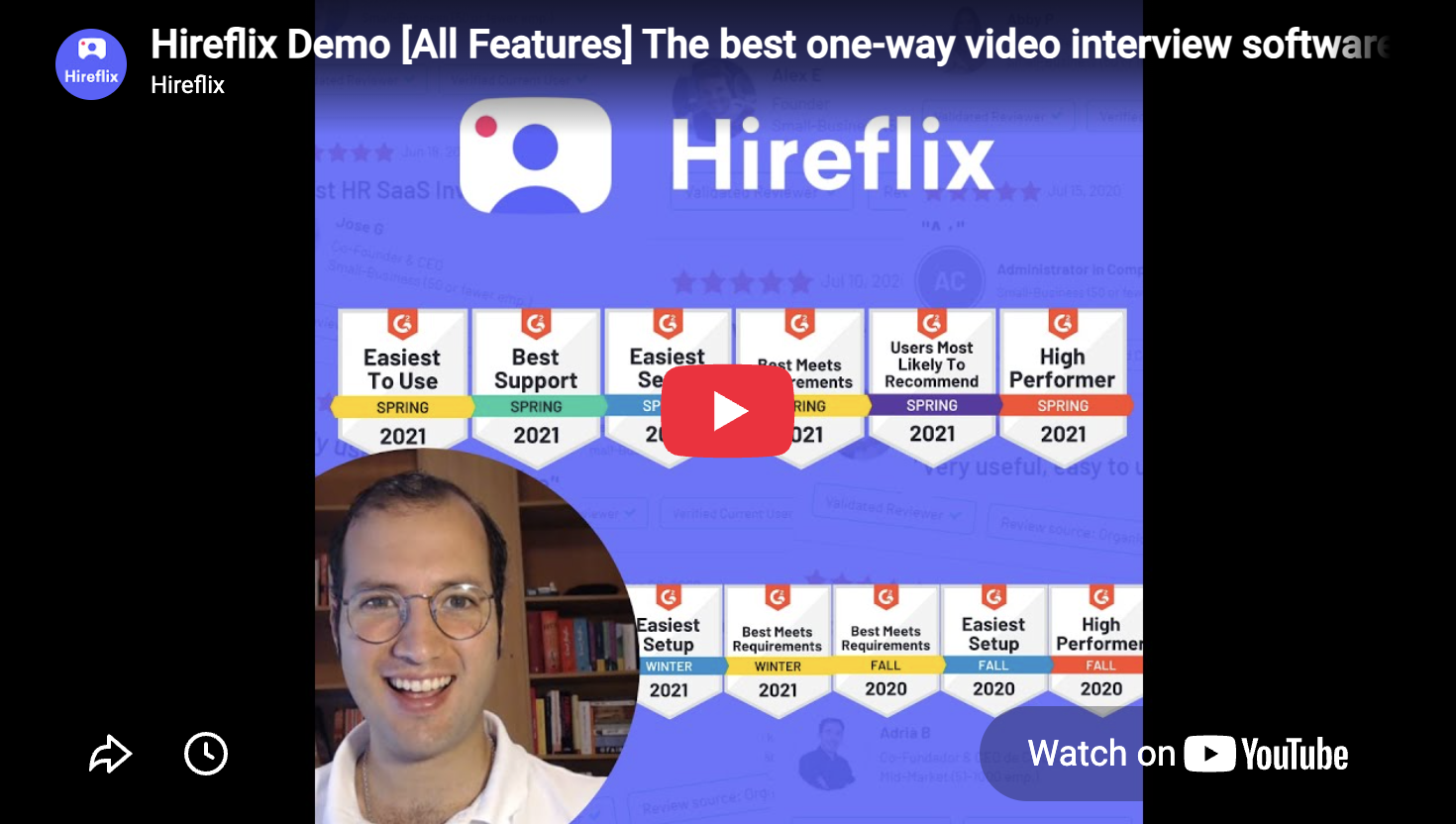
Want to see how Hireflix works in practice? Watch the demo to explore its features and workflow.
Build a Smarter Resume Screening Process
Resume screening should be structured, consistent, and tied to real job requirements. But AI-assisted applications have made resumes easier to polish and harder to trust as a standalone signal.
For teams that want to spend less time on resume review and verify candidate ability earlier, Hireflix can help. With one-way video interviews, your team can ask the same questions, review responses on your own time, and make better screening decisions before the first live interview.
