How to Conduct a Phone Screening Interview (and the Best Alternative to Get Better Hires)

Updated 5/11/26
Phone screening interviews are a common way to narrow down candidates early in the hiring process.
They can help recruiters confirm basic qualifications, assess communication skills, and decide who should move forward, but they can also become time-consuming and hard to scale, especially in high-volume hiring.
In this article, we’ll cover how phone screening interviews work, how to conduct them well, and how to make them more engaging for candidates.
We’ll also look at why many teams are moving away from phone screens in favor of one-way pre screening interviews, which offer a faster and more flexible way to screen candidates without all the scheduling hassle.
What is a Phone Screening Interview?
A phone screening interview is a short, early-stage conversation between a recruiter and a job candidate. It usually happens before a full interview and is meant to quickly determine whether the person is worth moving forward in the hiring process.

During a phone screening, recruiters typically ask a few basic questions about the candidate’s background, interest in the role, availability, salary expectations, and overall fit. The goal is not to conduct a deep evaluation, but to narrow the pool before investing more time in live interviews.
Main Goals of Phone Screening Interviews
Phone screening interviews are designed to help recruiters make quick early decisions before committing to a full interview process. At this stage, the goal is usually not to find the perfect hire. It’s to filter out people who clearly are not the right fit and identify the candidates who deserve a closer look.
In most cases, recruiters use a phone candidate screening method to confirm a few basic things:
- Does the candidate understand the role?
- Can they clearly explain their relevant experience?
- Are their salary expectations, availability, or location compatible with the position?
- Do they seem genuinely interested in moving forward?
A short conversation can help answer these questions and reduce the number of unsuitable candidates in the pipeline.
How to Conduct Phone Screening Interviews
If you plan to use phone screening interviews, the process should be simple, structured, and easy to repeat.
A good phone screen helps you rule out poor-fit candidates early, but it should never become a long, drawn-out substitute for a real interview.
1. Set a clear goal for the call
Before reaching out to candidates, decide exactly what the phone screen is meant to uncover. Most teams use it to confirm basic qualifications, interest in the role, salary expectations, availability, and any obvious deal-breakers.
2. Use the same core questions for every candidate
A structured set of screening questions makes the process more fair and more useful. When candidates are asked the same foundational questions, it becomes much easier to compare answers and spot who is actually worth moving forward.

3. Keep the conversation short and focused
Phone screens should usually last between 15 and 30 minutes. That gives you enough time to confirm the essentials without draining your schedule or the candidate’s energy.
Long screening calls often create extra work without adding much value, especially when you still have more interview stages ahead.
4. Take notes
As the candidate answers, write down the most important points and assess them against clear criteria.
A basic scorecard or checklist can help you stay consistent from one candidate to the next. Good notes also make it easier to explain your decision later and avoid relying on memory alone.
5. Move quickly
Once the call is done, decide promptly whether the candidate should move forward. Slow follow-up can cause strong candidates to lose interest or accept another offer.
3 Problems with Phone Screening Interviews
While phone screening interviews have proven popular and are a good choice in some situations, they’re not always the best option, particularly if you’re a recruiter staring down the barrel of some high-volume hiring.
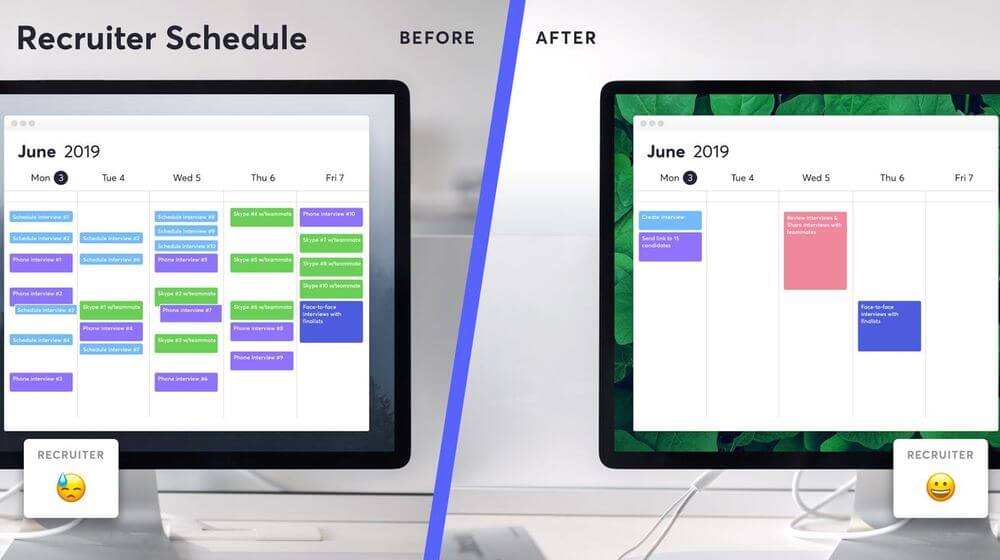
Problem 1: Difficulty Scheduling
Finding times to schedule a phone call that will not conflict with the set schedules of both parties is challenging. This dynamic is only exacerbated when you’re attempting to schedule meetings across time zones.
While scheduling automation tools can lighten some of this load, they can’t fully solve all the issues involved.
One way to eliminate problems related to scheduling a remote interview is to rely on asynchronous video interview tools.
With this system in place, the screening can be conducted and reviewed at any time, freeing both you and suitable applicants to complete or review the screening in your own time.
Problem 2: Lack of Candidate Engagement
Any human resource specialist, hiring manager, or recruiter who has been in the industry for any length of time will tell you that the lack of candidate engagement in the screening process is a serious problem.
Job candidates don’t always show up for phone screenings, and when they do, many job seekers do not appear at their best advantage over the phone. This may be especially true if they’re of the younger generations.
When setting up your hiring process, always remember that generational communication styles could have a big impact. While boomers and Gen X still rely on phone calls, millennials and Gen Z (“zoomers”) actively dislike them.
Yes, phone screenings are about elimination . But the awkward nature of the medium and the fact that certain generations of workers may perform poorly via this medium should make you wary.

Phone screening interviews may lead you to eliminate qualified candidates who may have turned out to be some of your best hires.
Job interview screenings are nerve-wracking for most interviewees. Even an ideal candidate can get stumped on a specific interview question, and when that happens during a live phone call, it does more than just slow down the screening process (which is a serious problem in itself).
Such a hiccup can also throw the job candidate off, further derailing the interview.
Problem 3: Time-consuming and Uneven
Scheduling, conducting, and analyzing phone screening interviews generally can eat up a lot of time and attention.
Even worse, the natural disadvantages of the medium can lead to low-quality hires. This problem is, perhaps, more dangerous than the time drain.
For recruiters, asking the same phone screen interview questions over and over again may prove tedious.
But more concerning is this: if you do not ask all the same questions in the same way to each candidate, you are not conducting standardized interviews. That means your results could prove uneven at best. At worst, your interview questions could be open to bias.
Fortunately, Hireflix’s one-way interview software eliminates these problems.
What Is One-way Interview Software?
You and your hiring team can save literally thousands of hours by switching to one-way interview software in place of phone screening interviews.
The process is simple.
With one-way interview software, you can record specific questions once and collect as many responses as you want, reviewing each response with your team as time allows.
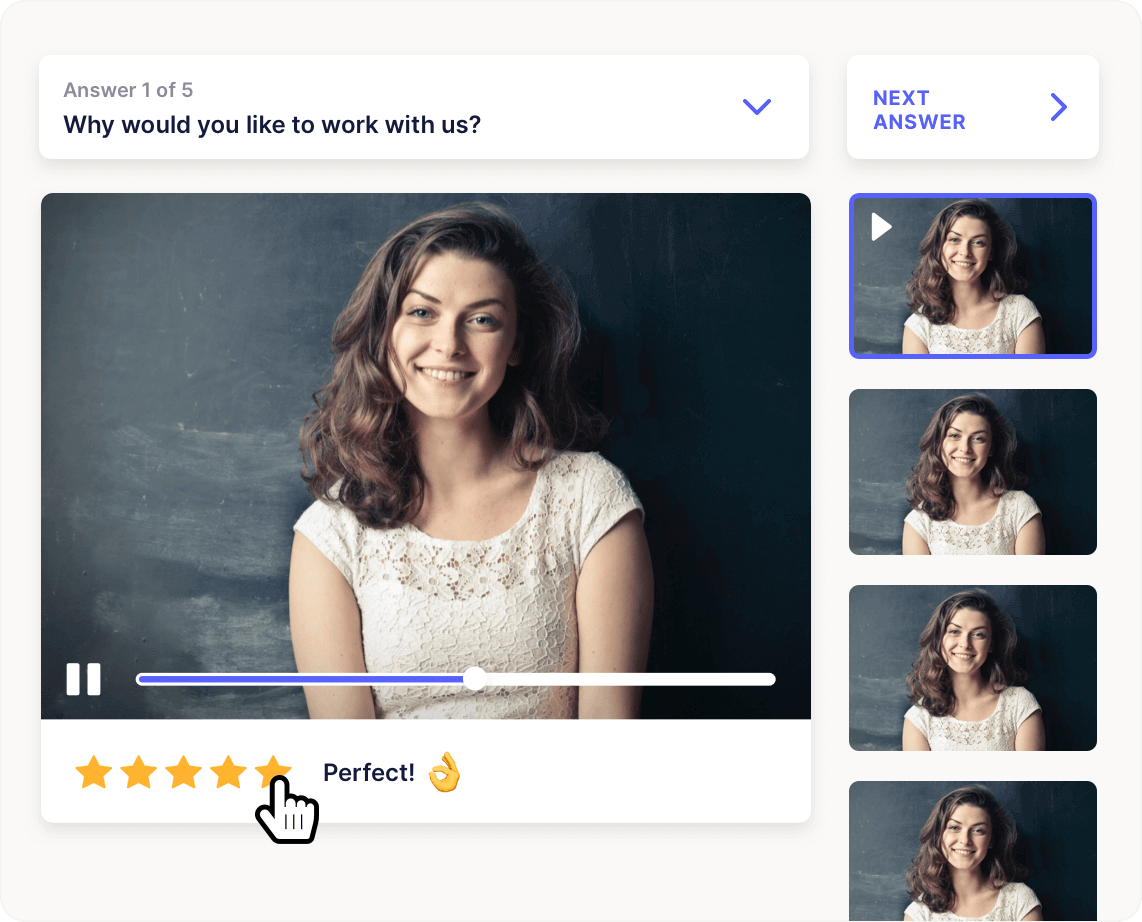
One-way interview software allows you to:
- Set your interview questions and build out your digital interview by recording each interview question just once.
- Invite qualified candidates to submit their responses on their own schedule.
- Share candidate responses and collaborate with other members of your hiring team.
- Choose the best candidates to continue through the interviewing process and schedule for live interviews.
The process saves time and energy for both recruiters and job seekers.
Everyone wins.
How Hireflix Can Improve Your Hiring Process
Like all good recruiting automation software options, Hireflix will improve your hiring process from start to finish.
Hireflix Saves Time
By automating the screening process, you eliminate time-consuming tasks like scheduling and conducting phone interviews.
All your time and energy can be focused on analyzing interview responses and choosing the most suitable candidates to move forward.
And this time-save matters. The best candidates leave the job market quickly. You will want to move fast to snag top talent.
Increases Candidate Engagement and Satisfaction
When recording their video interview answers, candidates can be confident they are showing themselves to their best advantage.
This gives them the best chance to pass their screening interview and move along in the hiring process.
Improves the Quality of Hires
One-way video interviews provide more insights into candidates' skills and personalities than phone screenings do. This improves your data set and gives you more information with which to make your decisions about who to move forward in the hiring process, greatly improving the quality of your hires.
Best of all, our seamless API and integration capabilities make it easy to get started.
You don’t need to be a tech professional to onboard, set up your interviews, and start screening high-quality hires today.
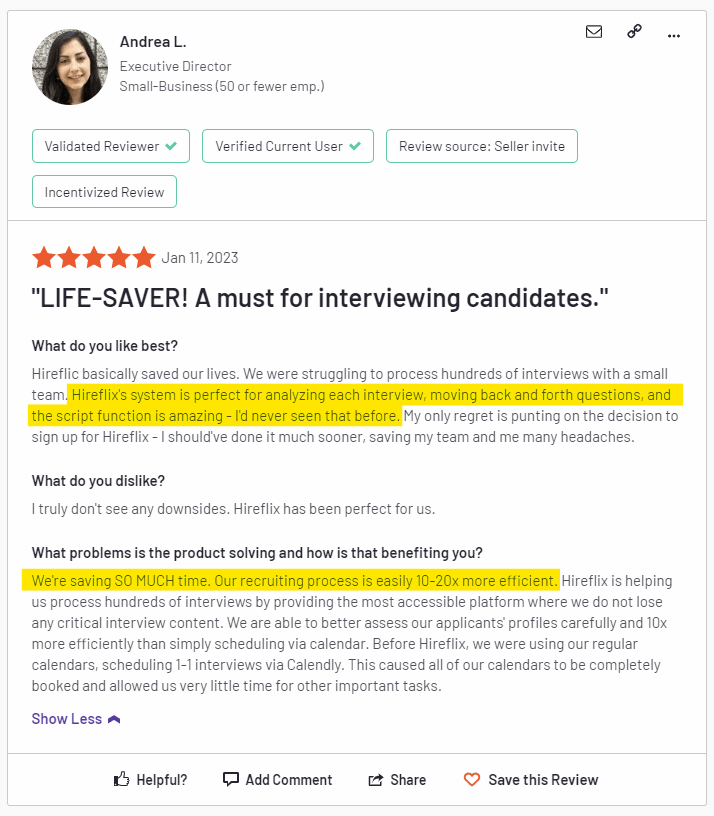
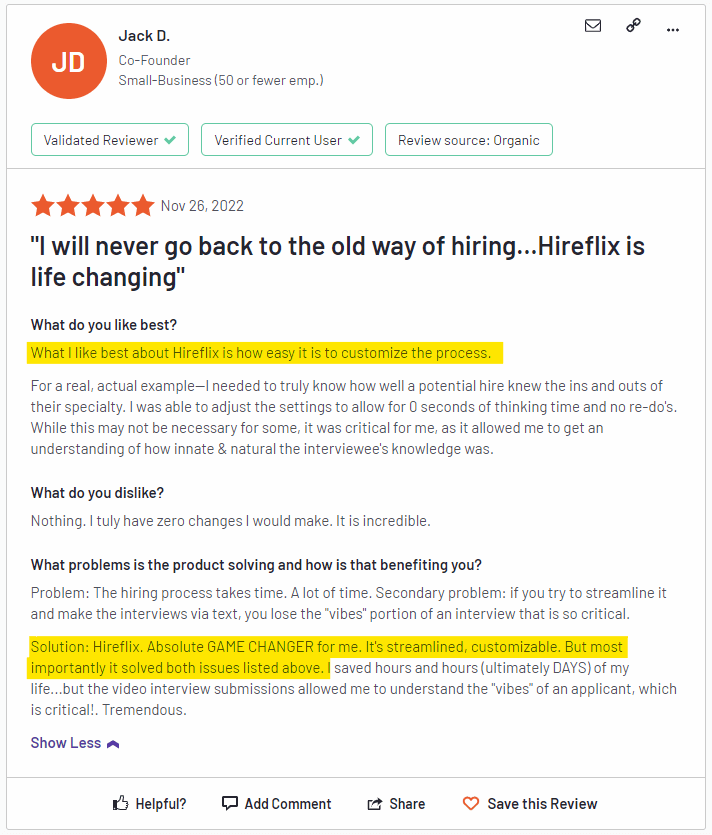
Improve Your Hiring Process with Hireflix
Hireflix’s one-way video interview software will:
- Accelerate your hiring process
- Help eliminate bias
- Save you time and money
- Allow job seekers to show themselves to their best advantage
- Help you find better hires faster with less effort
To see Hireflix in action, request a demo today!
FAQs
How can I make my phone screening interview more engaging for candidates?
To keep your phone interview more engaging, keep the call clear, warm, and conversational. Set expectations upfront, use active listening cues, ask thoughtful follow-up questions, and give candidates time to ask their own questions too.
If you want an easier alternative, Hireflix lets candidates record one-way video responses on their own time, so you can reduce scheduling friction and still get more complete answers than a phone screen.
Can I use a phone screening interview to screen out unqualified candidates?
Yes, a phone screening interview is a useful tool to weed out unsuitable candidates. However, Hireflix’s one-way video hiring software provides a faster and more convenient method for finding the best hires, fast.
How do I ensure that my phone screening interview process is fair and unbiased?
After filtering your questions for unconscious cultural bias, one of the best steps you can take is to make sure each candidate is being asked the same questions in the same way during every interview. With Hireflix’s one-way video interview software, you can be certain that all candidates are being given the exact same interview questions in the exact same way.
Why are one-way video interviews a better alternative to phone screening interviews?
With Hireflix’s asynchronous one-way video interview software, you can conduct high-volume screenings quickly and effectively. You and your team can review responses and share notes at your convenience, moving qualified candidates along to live interviews and ensuring better hires while still saving time, energy, and resources.
