What New Amazon DSP Owners Get Wrong About Hiring in Year One

Most new DSP owners figure out how to get routes staffed in year one, but struggle to build a hiring process that still works once the first scramble is over.
That struggle usually comes down to four mistakes, based on what we’ve seen working directly with DSPs and the results from three Hireflix customers that changed how they hire.
Fixing them early can save a lot of manager time, reduce costly hiring misses, and make peak season much easier to handle.
Mistake #1. Prioritizing Headcount Over Screening in the Rush to Fill Routes
When routes need drivers, getting more applicants through the door can feel like the obvious solution. But a bigger candidate pool only helps if you have a good way to decide who’s actually worth moving forward.

One Hireflix customer, AMP, has an old process that’s a good example. Applicants were invited to the station, added to a sign-in sheet, and essentially sorted out once they were already there. There wasn’t much screening before managers started spending live time with them.
It’s a familiar problem among owners discussing Amazon DSP hiring and retention. When staffing pressure is high, speed can easily turn into “get everyone in and see who sticks.”
CTR Logistics had a similar gap. Their process relied on a QR code, an inbox, a spreadsheet, and in-person interviews for candidates who sounded fine during an initial conversation.
Adding an upfront video screening step changed the numbers considerably. Around 100 applicants over five days can now be narrowed to roughly eight in-person interviews for three openings. The video screen can also surface promising candidates that resume screening alone might have overlooked.
Mistake #2. Letting First-Round Screening Consume Too Much Time
A 15-minute phone screen doesn’t sound like much until you multiply it by dozens of applicants. For a new DSP owner or operations manager, those calls compete with route performance, staffing, safety, dispatch issues, and everything else that needs attention during the day. Screening can become a major time sink before you realize it.
515 Logistics experienced that firsthand. Their old process involved 15 to 20 minute phone screens for each candidate, and the conversations weren’t always consistent from one applicant to the next.
Recorded video interviews cut that review time to roughly one to two minutes per candidate. That difference can make an impact in a competitive labor market. Drivers may be talking to several employers at once, so waiting days to get someone through an initial phone screen can mean losing them before you’ve had a chance to properly evaluate them.
Mistake #3. Underestimating the True Cost of Turnover and Bad Hires
The real cost of a bad hire can include recruiting, screening, onboarding, paid training, manager time, equipment, and the productivity gap while a new driver gets up to speed.
For DSPs, those expenses can add up quickly. Steph’s Books, which specializes in Amazon DSP bookkeeping, estimates the full replacement cost at around $3,305 to $5,100 per driver. That’s their DSP-specific estimate rather than an Amazon benchmark, but it gives owners a useful idea of what repeated turnover can actually cost.
It also changes how you think about retention. Turnover isn’t only something that happens after onboarding. It can be connected to decisions made much earlier in the process, including who gets hired and what expectations were set before they accepted the job.
That’s why avoiding a mis-hire is part of retention too. If certain types of new hires repeatedly leave within their first few weeks, look backward. Were they properly screened for the schedule, pace, physical demands, and realities of the work? Did the hiring process give them a clear picture of what the job would actually involve?
Mistake #4. Building a Hiring Process That Breaks Under Peak Demand
A hiring process that works when you need five drivers a week may fall apart when you suddenly need four times as many. Peak season gives you very little room to figure that out on the fly.
Owners need enough lead time to recruit, screen, hire, and train additional drivers before those extra routes actually arrive. Steph’s Books gives a useful example, with routes rising from around 25 during normal periods to roughly 32 to 38 during peak. Their guidance points toward starting hiring and training in September or October so drivers are ready by mid-November.
The bigger lesson is that your hiring process needs spare capacity before you need it. 515 Logistics built that kind of flexibility into its pipeline. The same process supports roughly five hires a week during quieter periods and scales to around 20 a week during prime season.
That’s what scaling the hiring process should look like. You’re not adding four times as many phone calls, interviews, and scheduling tasks just because hiring volume quadruples. More candidates move through the same structured process, and manager workload doesn’t need to grow at the same rate.
How to Build a Year-One DSP Hiring Process That Avoids These Mistakes
You don’t need a complicated recruiting operation to avoid most of these problems. A consistent screening step before managers start spending significant live time can make a big difference.
Build these six habits into the process early:
- Screen before live interviews — Put a consistent first-stage screen in place before committing manager time, so the first conversation isn’t also the first real evaluation
- Standardize evaluation — Ask candidates the same job-relevant questions and use a simple scorecard rather than relying on memory or gut feel
- Track funnel conversion — Watch where applicants stop progressing so you can spot a specific bottleneck instead of assuming you have a general hiring problem
- Measure screening speed — Track how long it takes someone to move from application to meaningful evaluation, especially when good candidates may be considering other offers
- Monitor early turnover — Look for patterns among drivers who leave within their first few weeks and connect those findings back to the hiring process
- Plan for peak demand — Make sure the process can handle more applicants before seasonal hiring volume starts climbing
A few metrics can tell you whether the system is actually improving. Track applicants received, screening completion, application-to-screen time, screen-to-hire conversion, weekly hiring capacity, and early turnover.
You don’t need dozens of recruiting KPIs. You need enough information to see where good candidates are getting stuck and where bad hires are slipping through.
Where Hireflix Fits Into the DSP Hiring Process
Hireflix sits between the application and the more expensive live stages of hiring. Across the DSP examples above, the basic change is the same:
- Asynchronous screening — Candidates complete the first interview without coordinating a live call
- Consistent questions — Every applicant goes through the same structured first-stage evaluation
- Faster review — Managers can review recorded responses much faster than running individual phone screens
- Selective live interviews — In-person or live interviews are saved for candidates who’ve already shown enough potential to move forward
CTR Logistics reports saving 8 to 10 hours each week, while its application-to-interview timeline dropped from more than 10 days to under three.
AMP can send an interview invitation within a minute of someone applying. Depending on the DSP, the completed one-way video interview can either serve as the main hiring evaluation or help decide who moves on to an in-person meeting.
That’s the practical value of adding a screening layer early. Managers spend less time figuring out who isn’t a fit and more time with the people who might actually become good drivers.
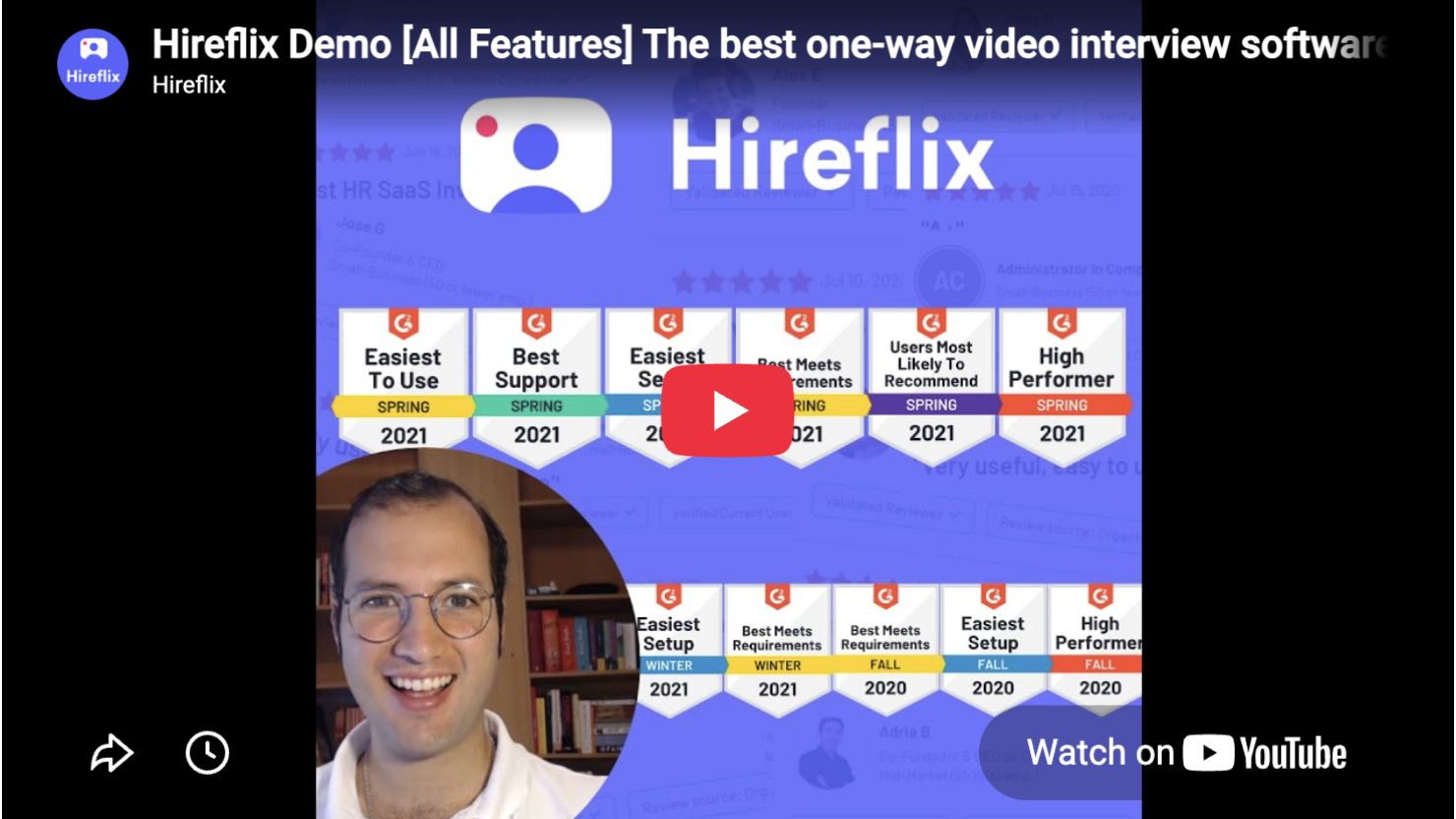
See how it works in the video below.
Build the Hiring System Before Hiring Becomes the Bottleneck
Year One hiring has a lot to do with deciding who gets through the funnel, how much manager time hiring consumes, what happens when the wrong person gets through, and whether the whole process can handle peak demand without turning into another daily fire.
Build those pieces early and you’ll have a hiring process that can grow with the DSP instead of becoming the thing that slows it down.
