How 3 Amazon DSPs Cut Driver Hiring Time From Weeks to Days

DSP driver hiring often slows down because the first meaningful screen happens too late. Callbacks, spreadsheets, and scheduling back-and-forth can stretch the process out for days. By the time recruiters connect with strong candidates, those applicants may already be considering other offers.
CTR Logistics, AMP, and 515 Logistics faced that challenge in different ways. One needed a better integrated screening process, another had to manage hiring at scale, and the third was competing in a fast-moving labor market.
All three improved the process by moving structured video screening earlier in the hiring funnel with Hireflix, helping them cut hiring timelines from weeks to days.
Why DSP Driver Hiring Slows Down
Most Amazon Delivery Service Partner (DSP) hiring processes don’t start out complicated. Over time, though, extra steps get added and each one creates another chance for a candidate to drop off or get stuck waiting.
A typical process might move from an application to a callback, manual resume review, phone screen, and finally a station or group interview. That means progress often depends on a recruiter and candidate being available at the same time. When they miss the callback, the hiring process can stall before it actually starts.
The bigger issue is that these early steps don’t always show who’s actually worth live interview time. Recruiters can spend hours calling and meeting candidates who aren’t a fit, while stronger applicants are still waiting in the same inbox.
Those delays add up. Candidates who don’t hear back quickly keep applying elsewhere. No-shows pile up when interviews are scheduled too far out, and operations teams lose time on meetings that never lead to a hire.
A group interview planned for twelve candidates but attended by only four isn’t just inefficient. It means the team still has open roles to fill and routes to cover. During high-volume hiring periods or in competitive labor markets, that pressure only gets harder to manage.
CTR Logistics Cut Application-to-Interview Time From 10+ Days to Under 3
CTR Logistics already had a structured interview process, and it worked well once candidates reached that stage. The problem was everything that came before it. There was no strong way to screen applicants early, so recruiters still had to rely on callbacks and phone screens before they could decide who was actually worth meeting.
CTR now uses Hireflix inside SmartRecruiters. Applicants answer six video questions before an in-person interview is scheduled, which moves the first meaningful evaluation much earlier in the process. Recruiters can get a clearer sense of communication, motivation, and basic fit before committing live time.
Application-to-interview time dropped from more than 10 days to under 3. They didn’t add more recruiters or reduce the quality of the evaluation. The team simply moved more of the screening work earlier, so stronger candidates could progress sooner.
The results
- 8 to 10 hours saved per week: Time that once went to phone screens and callback attempts can now be spent on candidates who have already shown enough promise to warrant a live conversation.
- About 100 applicants reviewed in five days: A volume that would have taken much longer to work through manually can now be screened within the same week.
- Only 8 in-person interviews needed to fill 3 openings: The team can narrow the pool before scheduling live interviews, which makes each meeting more purposeful.
AMP Scaled Driver Hiring Across Roughly 30 DSPs
AMP manages recruiting, HR, compliance, and candidate pipelines for roughly 30 Amazon DSPs. Any inefficiency in the hiring process turns into thirty inefficiencies at once.
Before Hireflix, that process was station-based and manual, built around whatever each DSP happened to run. That made it nearly impossible to keep consistent, measure, or improve across so many hiring teams.

Consistency is what changed. Candidates now get a Hireflix interview link within one minute of applying through Indeed, so screening starts before a recruiter even opens the application. That speed matters most right after someone applies, while they're still job hunting and haven't accepted an offer elsewhere.
Applied across every DSP in AMP's network, that one-minute link turned a fragile, station-by-station process into a repeatable system, one that works the same whether it's serving one DSP or thirty.
The results
- 80% of DSPs now hire from video alone: No live screening call required before the decision to move a candidate forward.
- 20% use video ahead of an in-person meeting: A first filter that still saves the time an unscreened conversation would have cost.
- Campaigns producing 5 to 20 hires in a single day: A volume that manual, station-based screening was never built to handle.
515 Logistics Used Faster Screening to Win in a Competitive Labor Market
Des Moines is a competitive labor market. Driver applicants there routinely interview with several companies at once. In that environment, the company that reaches a candidate first often wins the hire. A driver still waiting on a callback will accept whoever gets back to them first, and it usually isn't the company that called three days later.
From phone screens to video reviews
515 Logistics rebuilt its screening workflow around that reality. A phone screen used to run 15 to 20 minutes per candidate, and most of that time went to scheduling logistics before the conversation even started.
A recruiter can now review a video response in 1 to 2 minutes, roughly a tenfold cut in review time. The signal holds up too: how someone communicates, whether they follow through, and whether they actually sound like they want the job.
That speed showed up directly in hiring volume. 515 Logistics scaled from about 5 hires per week during off-peak periods to roughly 20 per week during prime season, without adding recruiting headcount to match.
The team didn't get faster at everything. It got faster at the one step that had been slowing every candidate down, and that was enough to absorb four times the volume.
What the Three DSP Stories Prove
Three different starting points led to the same fix. CTR needed better screening quality. AMP needed a repeatable process at scale. 515 Logistics needed raw speed in a competitive market. All three got there the same way: by moving the first real screen earlier in the funnel.
Each team used video answers to spot motivation, follow-through, communication, and basic fit before spending any live interview time. None of them changed how many people applied, and none lowered the bar for who got hired.
What changed was how quickly a qualified applicant reached someone who could actually make a decision, and how little time got spent on candidates who were never going to be a fit.
Benefits of One-Way Video Interviews Before Peak Hiring Season
DSP hiring picks up quickly from October through mid-December. A screening process that works fine during a quieter month can become a serious constraint once application volume rises. Recruiter capacity usually stays the same, so delays at the first screening stage can quickly spill over into staffing gaps and uncovered routes.
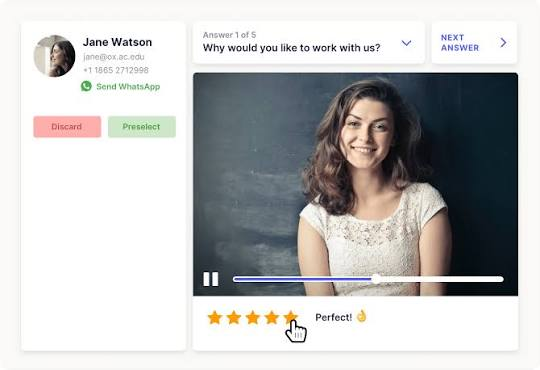
515 Logistics shows what a more scalable process can look like. Sponsored ads sent candidates straight into video interviews, giving the team a way to handle more applicants without adding the same amount of recruiter time. Instead of spending 15 to 20 minutes on each phone screen, the team could review a video in one to two minutes.
That made it possible to increase hiring from about 5 people per week to around 20 during peak periods without putting the same pressure on recruiter capacity.
Teams need a faster way to identify the strongest candidates and move them forward, so live interviews and station visits are spent on people who are more likely to become hires.
How Hireflix Fits Into the DSP Hiring Workflow
Hireflix isn't a replacement for a DSP's hiring strategy. It's the screening layer that sits in front of it: one-way video interviews that collect structured answers before a live interview or station visit ever gets scheduled. Interviewing, compliance checks, and the final hiring decision stay exactly where they were before.
That single change reduces wasted calls, no-show risk, and inconsistent first screens across a hiring team. In practice, it connects to the workflow a few different ways:
- ATS integrations: For teams like CTR that were already running SmartRecruiters.
- Automated interview links: Sent the moment someone applies, for teams like AMP managing dozens of DSPs at once.
- Manual invite options: For platforms without a native integration, covering teams like 515 Logistics running campaigns through channels like Indeed.
Each path leads to the same outcome: candidates move faster, reviewers spend less time sorting applications by hand, and recruiters get their week back instead of losing it to callbacks that never connect.
Cut Driver Hiring Time From Weeks to Days With a Better First Screen
CTR Logistics, AMP, and 515 Logistics faced three different hiring problems, and all three solved them the same way: moving the first screen earlier. The biggest win in each story wasn't a new sourcing channel or a bigger recruiting team. It was replacing wasted calls, station visits, and first interviews with a faster, more consistent way to decide who actually deserved live time.
It's a small change with a compounding effect. A few fewer minutes per candidate, multiplied across every application a DSP receives, adds up to hours of recruiter time back each week, and a funnel that moves qualified drivers through in days instead of weeks. It's also harder to make this kind of change once peak season is underway, which is why these three DSPs made it before the surge hit, not during it.
If driver hiring delays are already showing up on your team, before peak season makes them worse, Hireflix is built for exactly this problem. Book a demo or start a free trial to see how a structured video screen can get qualified drivers in front of your team days sooner.
