8 Benefits of Structured Interviews for Recruiters

Hiring the right person ranks among the highest-stakes decisions any team makes, yet plenty of interviews still run on instinct and open-ended conversation.
This guide lists the eight clear benefits of structured interviews for anyone in recruiting or talent acquisition, and shows how a more consistent approach leads to better hiring decisions.
What are Structured Interviews?
A structured interview is a hiring method where every candidate answers the same core questions, in the same order, and is evaluated against the same criteria. In this setup, the interviewer follows a planned script built around the role.
The point of this structured approach is comparison. When candidates respond to identical prompts, you can weigh their answers against shared evaluation criteria instead of relying on whoever happened to make the best first impression.

This stands in contrast to a traditional unstructured interview, where the questions, topics, and tone often shift from one applicant to the next. A semi structured interview sits between the two, keeping a consistent core while leaving room for some flexibility.
Benefits of Structured Interviews
Structured interviews improve hiring by making each conversation more consistent and actually tied to the role. The benefits below show why recruiters and hiring teams use this approach to reduce guesswork and make stronger decisions.
1. Improve Consistency Across Candidate Interviews
Consistency is the foundation that makes everything else about structured interviewing work. Because every candidate receives the same set of interview questions and is measured against the same standards, the process produces results you can actually compare.
This becomes even more useful once hiring spreads across multiple teams, roles, and locations. A repeatable structured interview process is a lot easier to manage than a patchwork of personal styles, and it keeps the bar steady no matter who runs the room.
Picture two candidates interviewing for the same job: if one fields tough scenario questions while the other gets a relaxed chat, the second may look stronger purely because the prompts were easier. Standardized questions close that gap and keep the evaluation fair.
2. Reduce Bias in Hiring Decisions
Bias rarely shows up as obvious prejudice. More often it slides in through first impressions or a vague sense that someone “feels right.”
Structured interviews push back against this by holding every candidate to the same questions and the same scoring criteria, which limits how much the interviewer’s personal preference can steer the outcome.
That discipline helps counter well-known traps such as:
- Affinity bias — Favoring candidates who feel familiar or share similar interests, backgrounds, or communication styles.
- Confirmation bias — Looking for evidence that supports an early impression instead of evaluating the full answer fairly.
- Gut-feel decision-making — Letting instinct carry more weight than job-related evidence.
Consistency alone is not a cure, though. Interviewers still need training, clear evaluation criteria, and the habit of grounding their scores in evidence rather than impressions. The structure sets the guardrails, but the people using it still have to stay honest within them.
3. Make Candidate Comparison Easier
Comparing candidates tends to break down during the debrief, especially when interviewers remember different details or focus on different parts of the conversation. Structured interviews make the comparison more concrete by turning each interview into a set of role-related data.
Hiring decisions are rarely about finding a “perfect” candidate. More often, the team has to compare tradeoffs: one candidate may show stronger technical judgment, while another may be better at stakeholder communication or problem-solving under pressure. A structured rubric makes those differences easier to see.

Instead of asking, “Who did we like best?” the team can ask, “Who gave the strongest evidence for the skills this role actually requires?” This change in perspective leads to a more focused debrief and a hiring decision that is easier to explain and defend.
4. Improve the Quality of Interview Feedback
Good hiring decisions depend on good feedback, and feedback gets noticeably better when interviewers follow a shared rubric. A rubric prompts each interviewer to capture specific insights tied to each question instead of reaching for a tidy summary at the end.
The difference shows in the comments. Instead of catch-all phrases like "good fit," "not strong enough," or "great energy," structured interviewing encourages notes that explain what a candidate actually said or did.
It’s that kind of specificity that gives the whole team a real reason a candidate should move forward or be passed over, which makes every downstream conversation more productive.
5. Strengthen Predictive Value and Role Alignment
Why do structured interviews tend to predict performance better? It comes down to design. Because the questions are built around the competencies, responsibilities, and real situations tied to the role, they measure the things that actually affect job performance.
Thoughtful question design lets you see how candidates think, communicate, solve problems, and apply past experience. Two question types are especially useful here:
- Behavioral questions — Shows how someone handled real situations in the past.
- Situational questions — Reveals how someone would approach challenges they are likely to face in the role.
This connection to the role is also why decades of research in personnel psychology have consistently treated structured interviews as a stronger selection process than unstructured ones for assessing future job performance.
6. Create a Fairer Candidate Experience
Fairness isn't only about ethics. It shapes how candidates feel about your company. When each person answers the same role-relevant questions, every applicant gets a genuine, equal chance to show what they bring.
A consistent structure also lowers the odds that one candidate benefits from a more relaxed or favorable flow simply by luck of the draw. People notice when a process feels organized, relevant, and even-handed, and that perception builds trust.
A strong candidate experience can be the difference between an offer accepted and a top applicant walking away, so the payoff reaches well beyond the interview itself.
7. Help Interviewers Stay Focused on What Matters
Even experienced interviewers can get distracted. A casual question about a hobby turns into ten minutes off-topic, or a likable personality pulls attention away from actual qualifications. Prepared interview questions act as an anchor, keeping the conversation tied to the role and the skills that matter.

That focus means interview time gets spent on competencies that influence job performance rather than small talk. None of this makes the conversation rigid, though.
Interviewers can and should ask follow-up questions to dig into an interesting answer or clear up something unclear. The structure simply makes sure the core ground gets covered before the discussion wanders.
8. Make Hiring Processes Easier to Scale
Hiring gets harder as a company grows, and structure is what keeps quality from slipping. A repeatable interview framework gives organizations a reliable way to train interviewers and get multiple hiring managers aligned on what “good” looks like.
The benefit applies at every stage of growth:
- Small teams scaling quickly can onboard new interviewers without reinventing the wheel.
- Mid-sized companies can add processes without creating unnecessary bureaucracy.
- Enterprise teams can hold a consistent standard across departments.
- Distributed hiring teams can review shared interview questions and scorecards across locations.
Even in a hiring rush, a shared framework keeps standards from slipping when the pressure is on to fill seats fast. Stronger structure also improves hiring efficiency because teams can evaluate candidates faster without lowering the quality of their decisions.
How to Get the Most Value From Structured Interviews
Structured interviews work best when the process is practical, role-specific, and easy for interviewers to follow. They also support full-cycle recruiting by giving teams a repeatable framework they can use from early screening through final evaluation.
Start With Clear Role Criteria
Strong structured interviews begin long before anyone meets a candidate. The first step is a clear-eyed look at the role itself, ideally through a quick job analysis that pinpoints what the job actually requires.
To make the criteria more useful, define:
- The core skills needed to succeed in the role
- The behaviors that separate strong performers from average ones
- The responsibilities the candidate will handle most often
- The outcomes that matter most in the first few months
Once those job requirements are clear, you can build strategic interview questions and a scoring rubric that map directly to them. Every question should earn its place by tying back to something the role needs, so your evaluation criteria reflect real job requirements rather than generic traits.
Keep the Process Practical
Structure is only useful if interviewers can stay with it. Train interviewers to ask the same core questions consistently while still using relevant follow-ups when a candidate's response deserves a closer look. Building that balance keeps interviews human without losing comparability.
A practical structured interview process should:
- Use a manageable number of questions
- Give interviewers clear scoring guidance
- Allow relevant follow-up questions when needed
- Stay simple enough to repeat across candidates and roles
It also helps to treat the process as something you refine over time. Review interview feedback regularly to spot questions that aren't pulling their weight, tighten scoring criteria, and improve hiring outcomes. A structured interview process should get sharper with each hiring round.
Bring Structure to Early Screening With Hireflix
Early candidate screening is where structure pays off fastest, and it is exactly where Hireflix fits. Hireflix lets your hiring team ask every candidate the same interview questions through one-way video interviews, so each applicant answers identical prompts on their own time.
The result is a far more consistent screening stage before any live interview begins. Instead of juggling scheduling and inconsistent phone screens, your team reviews comparable, role-relevant answers side by side. That way, you can identify who advances to the next rounds faster and with more confidence.
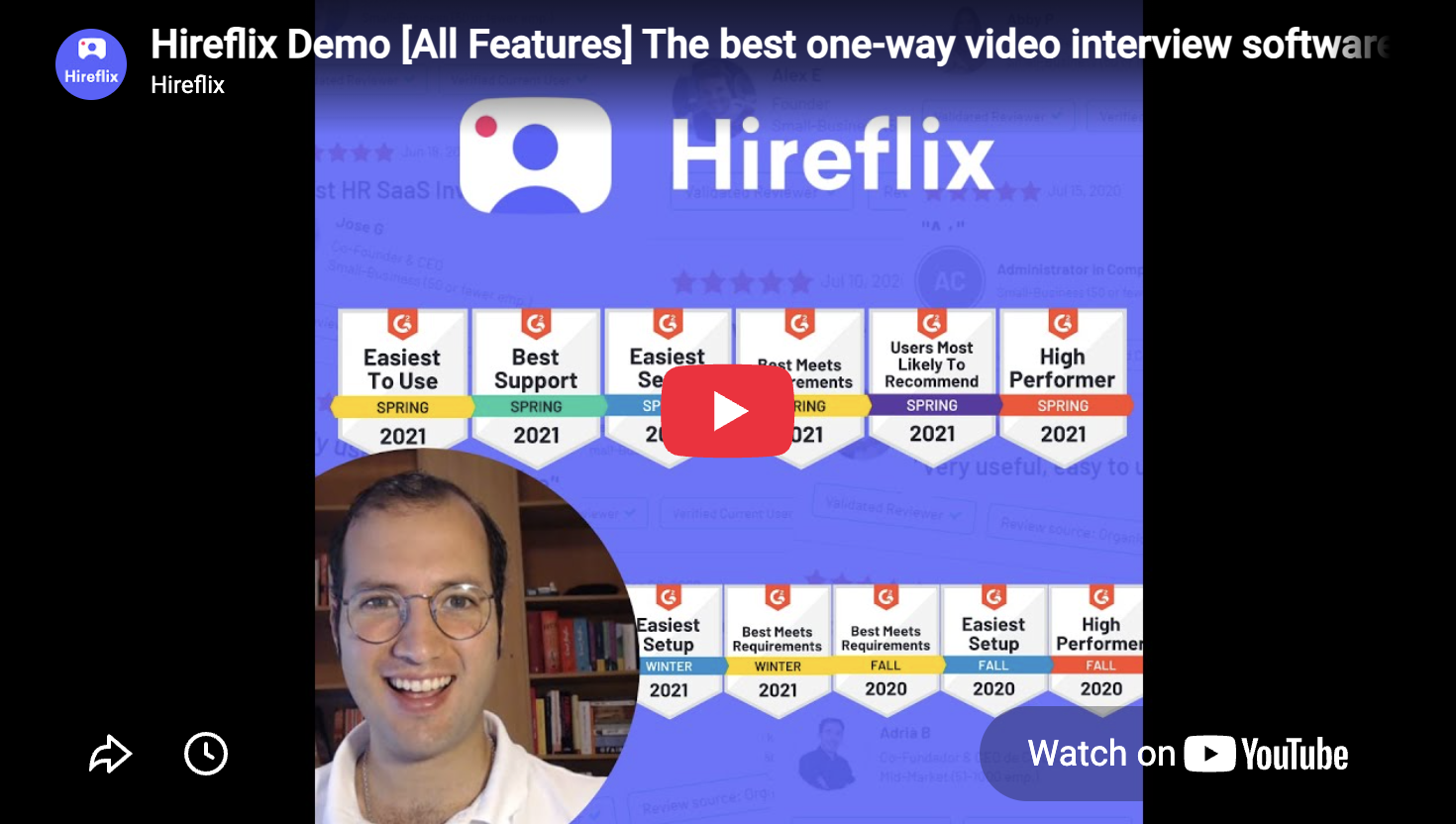
Want to see how Hireflix works in practice? Watch the demo to explore its features and workflow.
Use Structured Interviews to Make Better Hiring Decisions
Across all eight benefits, the throughline is the same: a structured approach turns interviewing from a guessing game into a repeatable process you can trust.
Structured interviews improve consistency, reduce bias, support fairer evaluation, and generate stronger hiring signals that lead to more informed hiring decisions tied to the work itself.
None of it requires a heavy overhaul. Define the role, write questions that match it, score every candidate the same way, and refine as you go. If you want to standardize early-stage interviews and compare candidates more consistently, take a look at Hireflix and see how one-way video interviews can bring that structure to the very start of your hiring process.
