Collaborative Hiring: The Recruiter’s Guide to Making It Work

Collaborative hiring works best when it is more than “more people in the interview.” It needs clear roles, better coordination, and a process that helps your hiring team gather useful input without slowing everything down.
In this guide, you’ll get a practical look at what collaborative hiring is, where it breaks down, who should be involved, how to structure it, and how to measure whether it is actually improving your hiring decision quality.
What Is Collaborative Hiring?
Collaborative hiring is a structured approach to recruitment where multiple stakeholders help evaluate and select candidates.
Instead of leaving most of the process to one recruiter or one hiring manager, the hiring team brings in the people who will actually work with the new hire or rely on the role in some way. It is a team-based hiring method built around broader participation and more shared input.
That does not mean everyone should weigh in on everything. The goal is not to create a committee culture. The goal is to improve hiring decisions through broader, role-relevant input.
Traditional hiring often concentrates decision-making with one recruiter or one hiring manager. Collaborative hiring creates more shared visibility and gives multiple team members a chance to assess different parts of candidate fit.
Benefits of Collaborative Hiring

Collaborative hiring can improve both decision quality and the overall recruitment process. When it is structured well, it helps teams gather better input, create stronger alignment, and improve the candidate experience.
Better decision quality
The biggest benefit is better decision quality. When recruiters, hiring managers, and selected team members contribute from different angles, you get a fuller view of a job candidate’s fit, skills, communication style, and likely impact on the team.
One person might spot role-specific strengths, while another might identify how the candidate handles collaboration or ambiguity.
That broader perspective can lead to better hiring decisions than a narrower traditional recruitment process. It becomes even more effective when teams use structured assessment interviews to evaluate candidates more consistently.
Stronger hiring outcomes
Collaborative hiring can also improve broader outcomes across the recruitment process. When supported by clear roles and strong process design, it can reduce time to hire, improve quality of hire, and strengthen metrics like candidate satisfaction and retention.
Better candidate and team experience
With clear roles and strong process design in place, teams can reduce time to hire, improve quality of hire, strengthen candidate satisfaction and retention, and give candidates a clearer sense of the people and environment behind the role. This broader input can also help reduce bias in the decision-making process.
Collaborative hiring delivers more than extra input. When the process is structured well, it helps teams make better hiring decisions, improve alignment, and create a stronger experience for both candidates and internal stakeholders.
Common Challenges in Collaborative Hiring
A collaborative hiring can improve decision quality, but it also adds complexity if the process is not clearly defined. Most of the common issues come from coordination gaps rather than the idea of collaboration itself.
Too many opinions without enough structure
The biggest risks are process-related. Too many opinions, vague responsibilities, and poor coordination can slow decisions down fast. Collaborative recruiting can become messy when multiple stakeholders are involved but no one is clear on who owns what.

Poor coordination creates extra friction
That is why structure matters. Collaboration should improve the hiring process, not create extra friction. Teams need clear expectations, evaluation criteria, and decision-making rules before the interview process starts.
Otherwise, collaborative hiring practices can turn into repeated feedback, duplicated interviews, and delayed approvals that frustrate both the hiring team and potential candidates.
Who Should Be Involved in Collaborative Hiring?
The most useful stakeholders are the people who can contribute distinct, relevant input.
- Recruiters manage the process, coordinate stakeholders, and keep the recruitment workflow moving. They are usually best positioned to protect consistency, candidate experience, and overall process health.
- Hiring managers evaluate role fit, define hiring needs, and guide final decision-making. They connect the interview process to the real needs of the job.
- Future teammates assess collaboration style, working dynamics, and day-to-day team fit. This can be especially useful in team based hiring, where a new hire will affect how employees work together.
- Cross-functional partners contribute perspective when the role will work closely with different departments or collaborative partners across the business.
The key is that each stakeholder should assess a different part of candidate fit instead of repeating the same feedback. One person might focus on technical or functional readiness. Another may focus on communication or collaboration.
Another may assess how the candidate will work with different departments. Purposeful involvement makes the collaborative hiring approach more useful and much easier to manage.
How Do You Build a Collaborative Hiring Process?

A strong collaborative hiring process starts before the first interview. The more clearly the team defines roles, expectations, and evaluation steps upfront, the easier it becomes to collect useful input without slowing the process down.
Start with alignment before interviews begin
A collaborative hiring process starts with alignment before interviews begin. Teams need shared role expectations, structured interviews, and agreed evaluation criteria. If the recruiter, hiring manager, and team members all have different definitions of success, collaboration will not improve the outcome.
Turn collaboration into a repeatable system
To make collaborative hiring repeatable, assign responsibilities, define interview stages, and standardize how feedback is captured. Decide who is screening, who is interviewing, who is evaluating which criteria, and who owns the final hiring decision.
This reduces confusion and keeps the collaborative recruitment process from becoming a loose series of opinions.
A more repeatable process also starts with shared evaluation criteria and stronger screening interview questions that help the hiring team assess candidates against the same standards.
Use asynchronous screening to reduce scheduling friction
One of the biggest pressure points in collaborative hiring is scheduling. If multiple team members need to join every early-stage interview, the process slows down quickly.
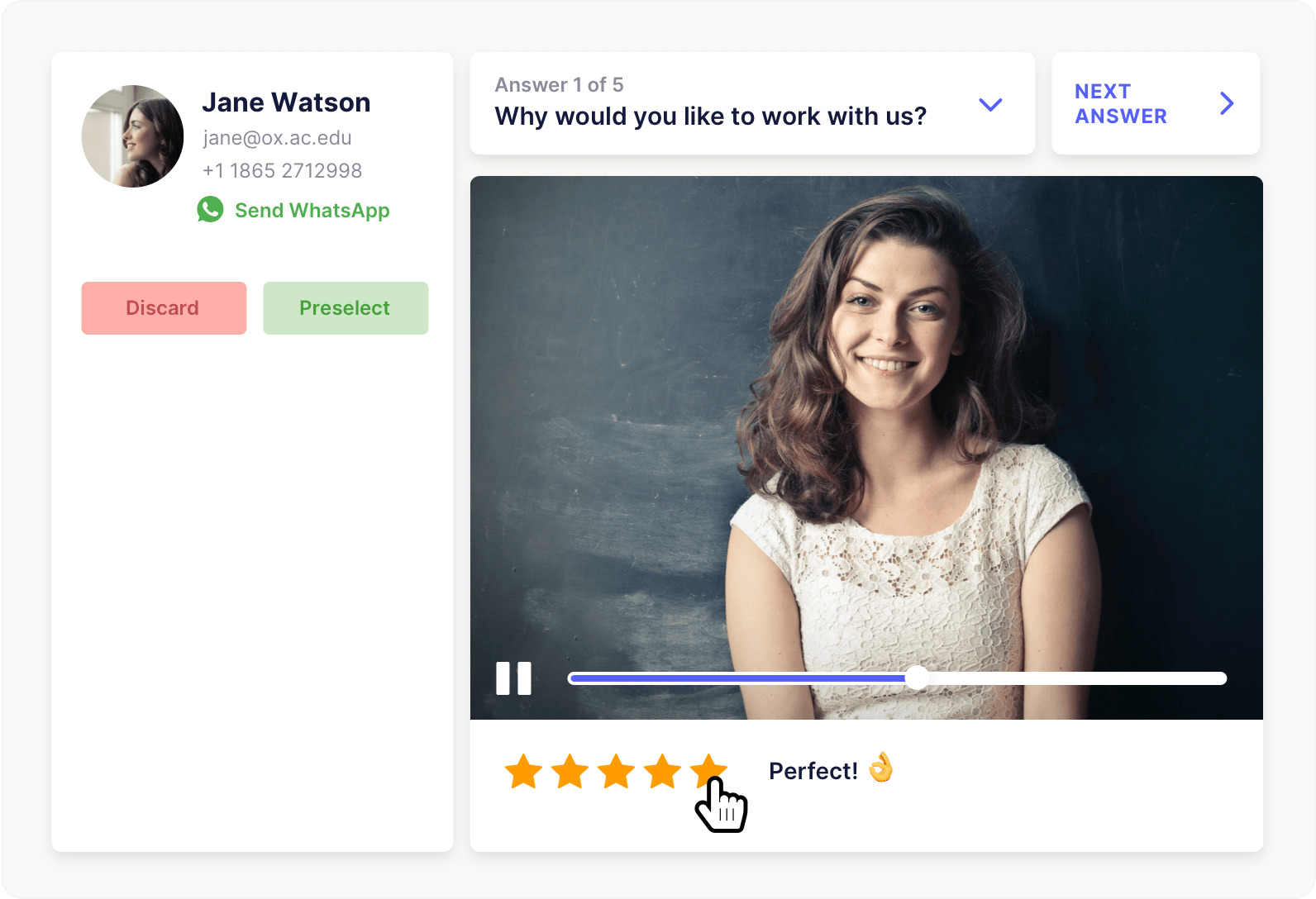
That is where asynchronous screening can help. Hireflix is built for this kind of early-stage collaboration: recruiters can collect standardized responses, and multiple stakeholders can review them on their own time before the team invests in live interviews.
Collaborative hiring works best when the process is clear enough to support multiple perspectives without creating extra drag. The goal is not just more input, but a system that helps the team use that input effectively.
What Role Does Technology Play in Collaborative Hiring?
Technology should support better collaboration, not complicate it. The right tools make it easier for multiple stakeholders to contribute useful input without turning the process into an administrative burden.
Using hiring tools to support better collaboration
The right hiring tools can centralize feedback, improve visibility, simplify coordination across multiple stakeholders, and make shared evaluation easier.
Features like asynchronous video interviews, automated scheduling, and centralized feedback can help collaborative hiring work more effectively.
Reducing the manual work that slows teams down
This matters because collaborative hiring usually breaks when the process becomes too manual. Recruiters end up chasing feedback, hiring managers wait on calendars, and team members forget what they observed in the interview.
Good collaboration tools reduce that admin burden and preserve signals across the recruitment process.
Implementing Hireflix to simplify early-stage review
Hireflix fits most naturally in the screening stage. When you want multiple team members to review early responses without creating more calendar strain, one-way video interviews can widen input while keeping the process manageable.
Teams can compare answers to the same questions, identify which potential candidates deserve live interviews, and move forward with better alignment.
Want to see how Hireflix works in practice? Watch the demo to see how teams can review early-stage candidate responses more efficiently.
How Do You Measure the Success of Collaborative Hiring?
If you want collaborative hiring to stay useful, you need to measure whether it is actually improving outcomes. The most useful indicators include:
- Time to hire — how long it takes to move a role from opening to accepted offer
- Candidate satisfaction — how candidates rate their experience throughout the recruitment process
- Quality of hire — whether the new hire performs well and meets role expectations after joining
- Retention — whether the new hire stays with the company over time
- Hiring-team alignment — how consistently recruiters, hiring managers, and interviewers stay aligned on decisions and criteria
These metrics help you see whether collaboration is improving the process or just adding steps. Hiring data and stakeholder feedback can reveal bottlenecks, duplicated interviews, unclear handoffs, or decision gaps that weaken the collaborative hiring method.
Build a Collaborative Hiring Process That Improves Decision Quality
Collaborative hiring works best when it is structured, role-based, and supported by clear feedback practices. It is not about involving as many people as possible.
It is about involving the right stakeholders, defining what each person contributes, and creating a collaborative hiring process that improves decision quality instead of slowing the team down.
For teams that want to involve multiple reviewers without creating more scheduling friction, Hireflix is a useful choice. It helps recruiters collect consistent screening responses, makes early-stage collaboration easier, and gives hiring managers and team members a way to weigh in before live interviews begin.
If you want collaborative recruiting to feel more organized and less chaotic, that kind of structured early-stage review can make a real difference.
FAQs
What is collaborative hiring?
Collaborative hiring is a structured approach to recruitment where multiple stakeholders help evaluate and select candidates, instead of leaving most of the process to one recruiter or hiring manager.
Who should be involved in collaborative hiring?
Recruiters, hiring managers, future teammates, and cross-functional partners should each be involved to assess a different part of candidate fit rather than repeating the same feedback.
How can technology support collaborative hiring?
Tools like asynchronous video interviews and centralized feedback let multiple stakeholders review candidate responses on their own time, reducing scheduling friction and manual admin work.
